

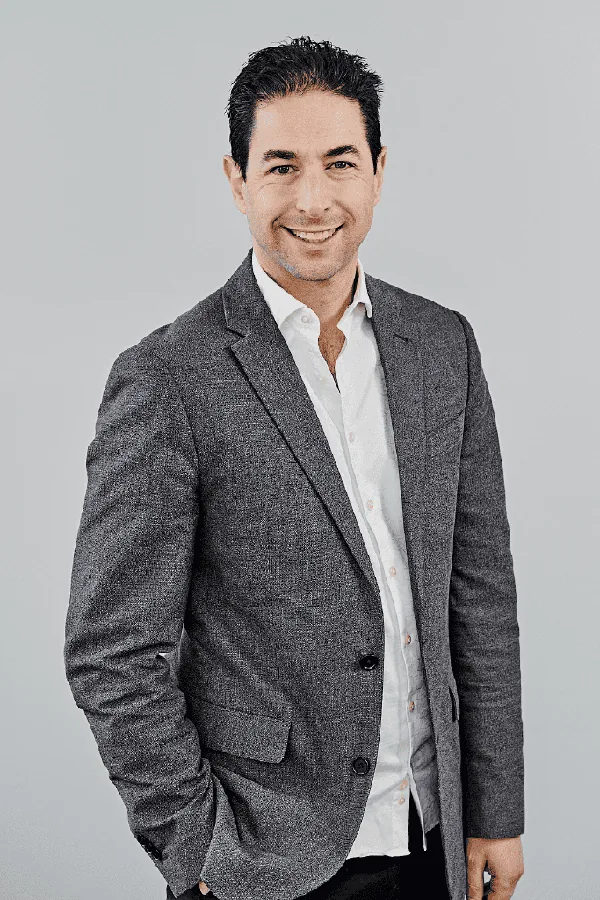
Justin Grossbard is the co-founder and CEO of CompareForexBrokers. He directs UK broker testing through London LD4, has traded forex since 1998, and owns the eight-criteria rating model behind every score on this site.
About me
Forex came first, the site came later. Trading currencies since 1998 through the platforms and account types that came and went gave a clear view of where costs hide and where marketing oversells. By the time Compare Forex Brokers launched in 2014, the experience of opening, funding and closing broker accounts had taught the team exactly that. For you, that experience is what separates a headline spread from the real cost of a position.
Why we started CompareForexBrokers
In 2014, broker comparison usually meant rewritten affiliate listicles ranked by whoever paid most. Noam Korbl and Justin Grossbard wanted the opposite: a scored model, real testing, and an honest line about what sat behind each rating. More reviews were never the point. The point was reviews you could use, with each rating coming from a method rather than a deal.
What I do day to day
He directs the testing and signs off the ratings. When a junior or guest draft comes in, the figures are re-tested and the draft is rewritten before it goes under his name, which works out to roughly 600 hours of broker testing a year. For you, the output is the site’s broker reviews and the ranked list of the best forex brokers in the UK. The final score on any review is mine to defend, and I stand behind it accordingly.
The rating model itself is the part I guard most closely. It weights eight criteria, with trading cost carrying the heaviest share, because cost is what you pay on every position and a small edge there compounds. The weights are set, the evidence a claim needs is decided, and the testing tier a review is allowed to use is all under my watch. If a broker changes its fees, its platform or its FCA permissions, the affected reviews come back across the desk before they re-publish.
Background and qualifications
Justin holds a Bachelor of Commerce with Honours from Monash University, completed in 2003, with majors in Finance and Marketing, and a Master of Marketing from Monash, completed in 2007. Those are genuine academic qualifications, not a financial-services credential, and he will not dress them up as one. If you are weighing the commentary, the authority behind his work is the trading record and the testing, not a set of letters after his name.
When reading our reviews, there is a gap worth stating plainly. No one on the team holds a UK financial-services credential such as the CISI or CFA, and Justin would rather say so than imply something we do not have. What supports the reviews instead is primary-source citation, the FCA register entry on every broker, a testing process we document in the open, and more than two decades of his own trading.
Media and press
Justin’s commentary on forex and broker costs has been published in Forbes, Kiplinger and Finance Magnates. For a UK reader, those are the titles worth your attention, because the analysis travels regardless of market.
How I trade
He trades the majors more than the exotics, sizes positions against the account rather than the leverage on offer, and treats the spread as the cost that matters most because it is the one he pays every time. For you, these rules are context, not advice. They are how he keeps his own testing grounded in real trading rather than theory.
The habit that has saved him the most money is unglamorous: he decides where he is wrong before he opens a position, not after. Leverage makes that discipline matter more, because the same 30:1 that makes a small account interesting is the same 30:1 that empties it on a move you did not plan for. Running broker tests all day has not made him a better forecaster. It has made him a more careful one, and that carries into how he judges the risk-management tools a broker provides.
Where to find me
You can verify who I am through these profiles:
- Forbes Business Council
- Kiplinger author page
- Finance Magnates author page
- Muckrack
- X (Twitter)
Fact-checked by David Levy, head of content at CompareForexBrokers. Read our editorial standards.