
Risk warning: CFDs are complex instruments and come with a high risk of losing money rapidly due to leverage. The majority of retail investor accounts lose money when trading CFDs. You should consider whether you understand how CFDs work and whether you can afford to take the high risk of losing your money. This page is general information, not financial advice. Advertiser disclosure.
A forex signal is a trade suggestion that names a pair, an entry, a stop and a target, sent by a provider or generated by software. In my view, most paid services do not outperform the free analysis tools already inside your broker platform, and some providers are scams the FCA actively names.
How signals work
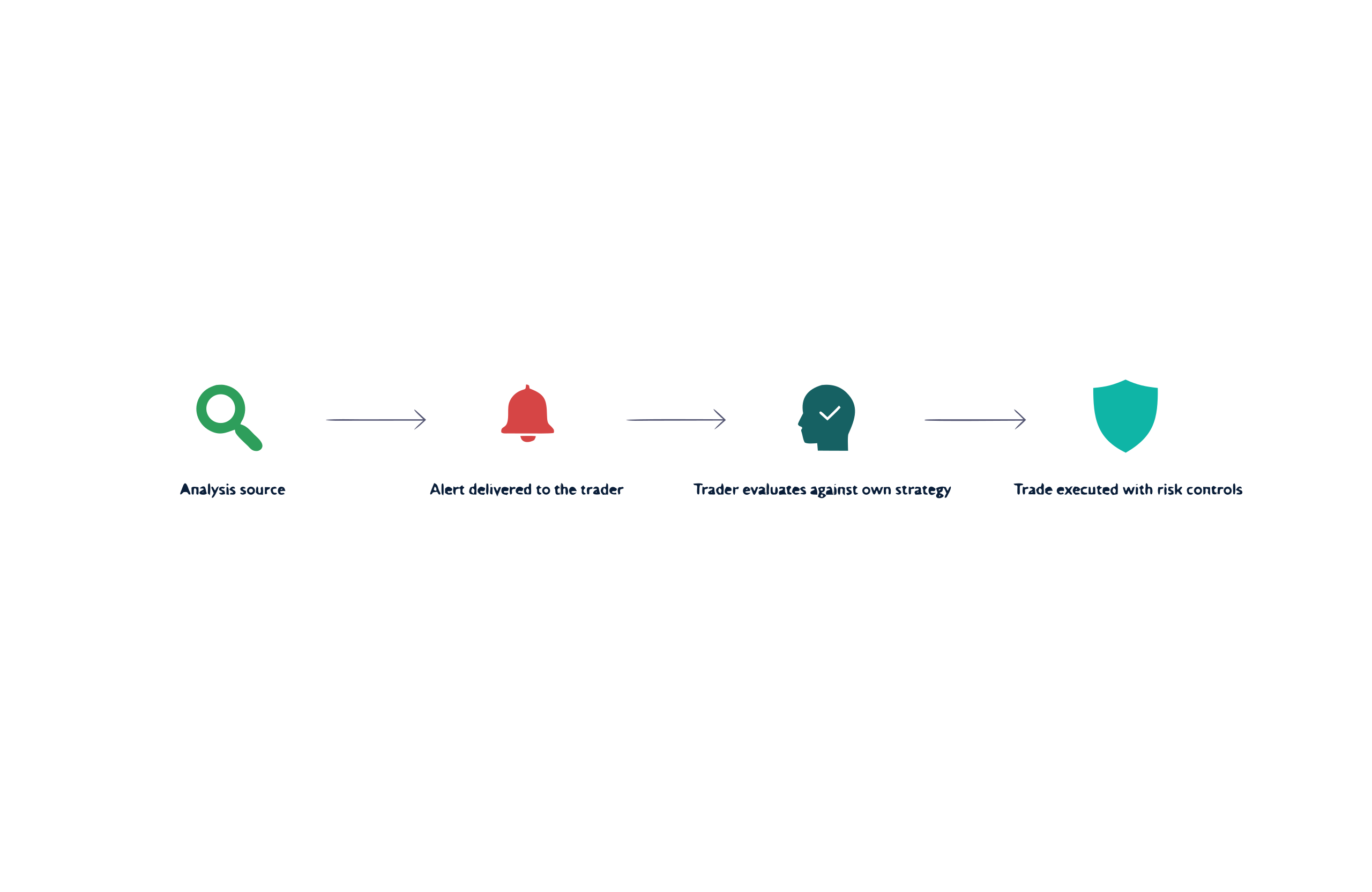
A signal names a pair, a direction, an entry price, a stop-loss and a take-profit, delivered by message, app or an auto-trading feed. Some come from human analysts, others from algorithms scanning price and indicators. You can place the trade manually or let a copy trading platform execute it automatically.
Why most paid signals disappoint
Free signals come built into most broker platforms, through analyst notes, economic calendars and pattern scanners, which cover what paid services repackage. Paid providers rarely publish an audited record, so claimed win rates are unverifiable. A signal also arrives without your account’s risk context, so blindly copying position sizes can breach sensible risk per trade. A provider claiming an 80% win rate with no independently audited track record is a marketing figure, not evidence. The FCA warns through its ScamSmart campaign that social media investment promotions, including signal and self-styled guru accounts, are a common route into scams, which is why the checks in the next section come before any payment. You can see which brokers build the strongest free analyst tools and pattern scanners into their own platforms, with FCA-regulated brokers compared on features, and our team tests these platforms on live accounts.
Checking a provider in the UK
A provider giving personal recommendations may need FCA authorisation, and signal or copy services are financial promotions under section 21 of the Financial Services and Markets Act 2000. Before paying anything, search the provider on the FCA Register, check it is not named on the FCA Warning List, and use the FCA’s ScamSmart tool to recognise the common patterns. How UK authorisation and the register work is set out in FCA regulation explained. In my view, a provider that pressures you, guarantees returns or cannot be found on the register is a clear warning sign. How individual FCA-regulated brokers present their own signal and analysis tools is covered in our broker reviews.
Use this checklist before you pay a provider anything.
| Check | Where to check | What a pass looks like |
|---|---|---|
| FCA authorisation | FCA Register (register.fca.org.uk) | Firm listed, status Current, name matches who bills you |
| Scam flags | FCA Warning List | Provider not named, and any clone-firm names checked too |
| Common scam patterns | FCA ScamSmart | No pressure tactics and no guaranteed returns |
| Track record | Independent audit, a verified third-party feed | Third-party-verified results, not screenshots |
| Risk fit | Your own account | Suggested position sizes within your risk per trade |
Common mistakes
- Paying for signals before checking the provider on the FCA register risks both money and data.
- Copying position sizes blindly ignores your own account risk and can trigger an avoidable close-out.
- Treating a high claimed win rate as proof, without an audited record, mistakes marketing for evidence.
The chart patterns guide covers reading the market yourself, and the full guide set is on the education hub.
A signal gives you an entry and a stop but never a size. Our position size calculator supplies the missing piece, and the automated version of the same idea is covered on our automated trading platforms guide and on expert advisors (EAs) for forex trading UK.
Our reviews are reader-supported. We may receive payment when you click a link to a partner site. Learn how we make money.
FAQs
What are forex signals?
Are forex signals worth paying for?
How do I check a forex signal provider in the UK?
What should a legitimate signal provider be able to show?
Related pages
About the author

Justin Grossbard is the co-founder and CEO at CompareForexBrokers. He has traded forex since 1998, leads UK broker research and has personally reviewed every FCA-regulated broker on this site. His work has appeared in Forbes, Kiplinger and Finance Magnates, and he holds a Bachelor of Commerce (Honours) and a Master of Marketing.