



Why UK traders need an FCA-regulated broker list
I disregard any ranking built for another market. A list made for Australia or an offshore jurisdiction compares brokers under different rules, different leverage caps and a compensation scheme that does not cover a UK retail account, so none of it applies to you.
Authorised by the FCA
A forex or CFD broker that takes UK retail clients has to be authorised by the Financial Conduct Authority.
An FRN you can check
Authorisation gives each firm a Firm Reference Number you can look up on the FCA register.
UK retail protections
It brings protections that offshore brokers do not: capped leverage, negative balance protection, and access to the Financial Ombudsman Service and the Financial Services Compensation Scheme.
Offshore arms left off
Where a broker only serves UK clients through an offshore arm, or has no UK retail permission, I leave it off rather than dressing it up as a UK option.
Every one of the 28 FCA-regulated brokers we cover on this site has a verifiable UK FCA retail entity we have checked. In my view, that verification is the first thing a UK trader should look for.
How we compare brokers
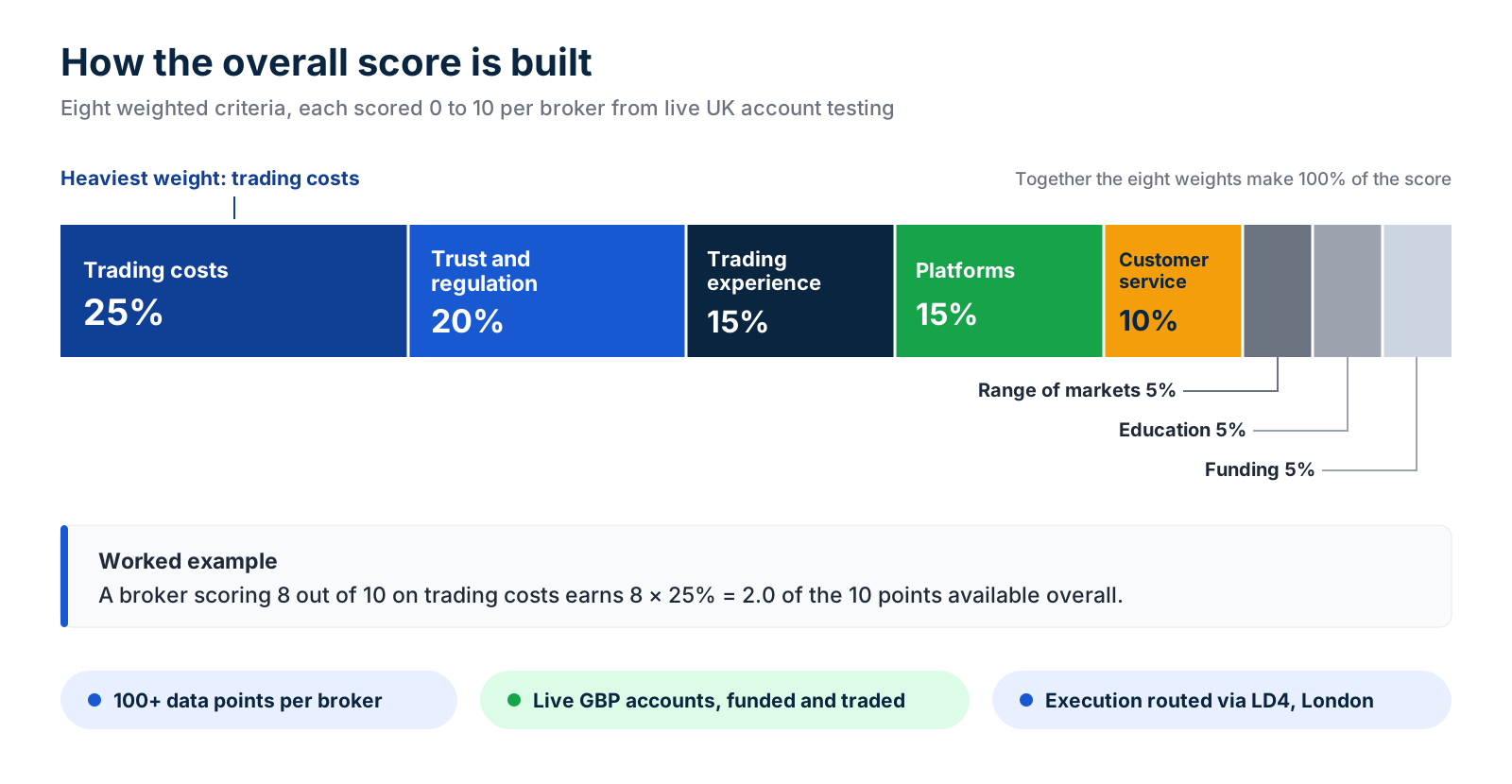
I want the ranking to reflect a scored model, not a sponsored running order. The full process, including the eight weighted criteria and the evidence basis behind every claim, sits on the methodology page. That evidence is a live UK account on all but one broker. The scores feed the individual broker reviews, and every review states the broker’s UK entity and FRN.
Spread testing
In my view, spread is the cost you pay on every trade, so it carries the heaviest weight in our model. We measure it in GBP terms on the pairs UK traders actually use, led by GBP/USD and EUR/GBP, and we record the average rather than the marketing “from” figure a broker quotes.
Execution testing
Execution decides whether the price you click is the price you get. I would not trust a broker’s own execution claims without live testing. Where we test it live, routing runs through LD4 in London, the data centre most UK-facing brokers use, and we log fill speed and slippage rather than taking the broker’s word for it.
FCA rules every UK retail trader should know
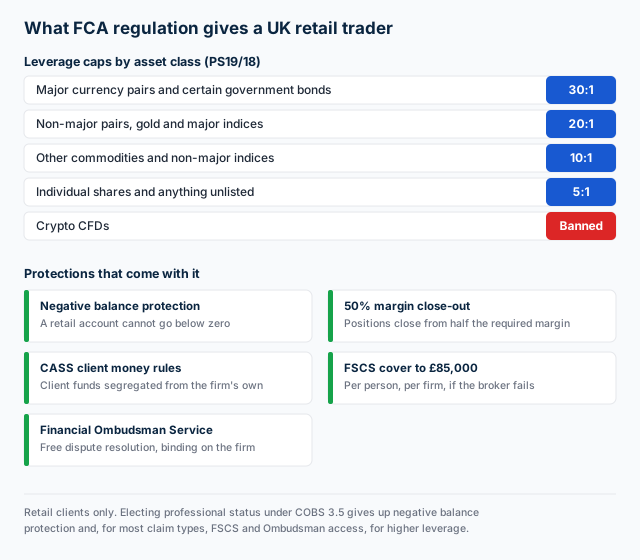
The FCA caps leverage and adds protections that change how much you can lose. These apply to every retail account at an FCA-authorised broker, whichever firm you pick. The full rule set, and what each cap covers, is in FCA regulation explained. I would read that page before opening an account.
Leverage is capped at position open
| Underlying | Maximum retail leverage |
|---|---|
| Major FX pairs | 30:1 |
| Non-major FX, gold, major equity indices | 20:1 |
| Commodities other than gold, non-major equity indices | 10:1 |
| Certain government bonds (gilts, US Treasuries, Bunds) | 30:1 |
| Individual equities and other reference values | 5:1 |
| Cryptocurrencies | Banned for retail |
These limits come from FCA policy statement PS19/18, in force since 1 August 2019. Any 100:1, 200:1 or 500:1 figure you see advertised is an offshore or professional-client number that a UK retail account cannot use. Which bonds qualify for the 30:1 tier, and the rest of the detail behind this table, sits in FCA regulation explained.
Negative balance protection and 50% margin close-out
Your account cannot go below zero. I consider negative balance protection non-negotiable for a UK account. Negative balance protection means a fast market move cannot leave you owing the broker money. Margin close-out is separate: once your account equity falls to 50% of the margin needed to keep your positions open, the broker starts closing them.
Bonuses banned, risk warnings standardised, crypto CFDs banned for retail
UK brokers cannot offer deposit bonuses, cashback or other trading incentives to retail clients. Each firm has to publish a standardised risk warning that includes its own percentage of retail accounts that lose money. Crypto derivatives, including crypto CFDs, were banned for UK retail consumers under PS20/10 from 6 January 2021.
What the disclosure rule actually shows
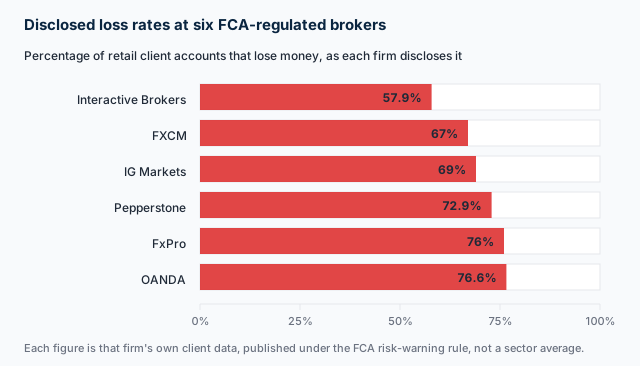
Every FCA-authorised firm has to publish the share of its own retail accounts that lose money, and update it annually. In my view these figures are not comparable to a sector average and they are not a ranking: they describe each firm's client base, not the quality of its pricing or platform.
- 57.9% to 76.6% across the six firms charted
- Six of six disclose a majority-loss figure
- Each firm own data, published under the risk-warning rule
A low figure is not a recommendation and a high one is not a warning about that specific broker. Leverage, not brand, is what moves these numbers.
FSCS protection up to £85,000 and the Financial Ombudsman Service
If an FCA-authorised broker fails and cannot return your money, the Financial Services Compensation Scheme covers eligible claims up to £85,000 per person, per firm. For disputes that do not involve insolvency, the Financial Ombudsman Service handles complaints once the broker’s own process is exhausted.
How to choose a broker if you are new to this
Three questions narrow the field faster than any feature list.
What do you want to trade?
Most people start with a handful of currency pairs, then add indices or commodities. If you mainly want UK and global shares, check whether the broker offers share CFDs or actual share dealing, because they are taxed and structured differently. IG and CMC Markets carry the broadest multi-asset range; Plus500 and eToro lean towards a simpler retail experience.
Which platform do you already know?
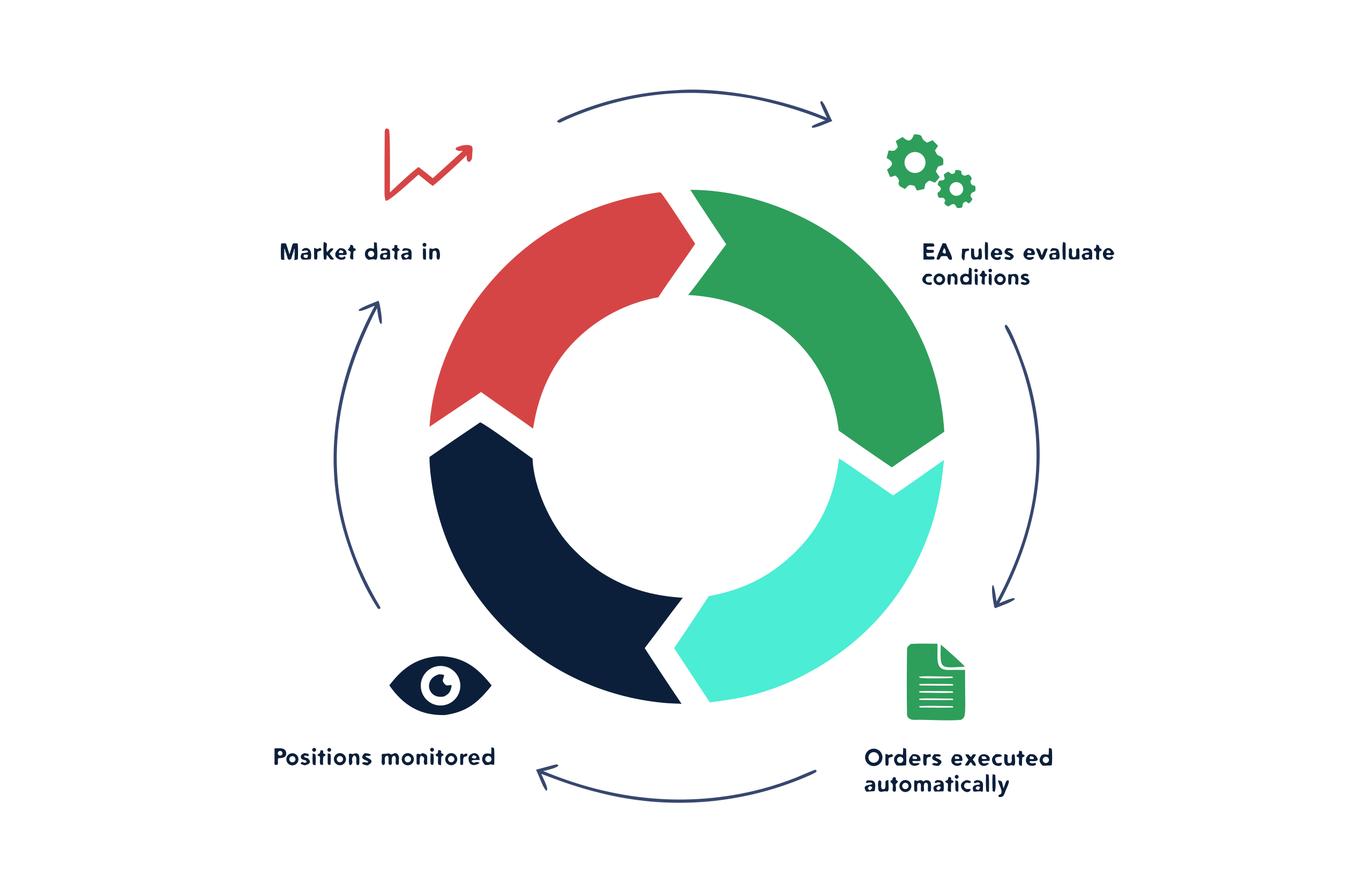
A platform you can read at a glance beats a powerful one you fight with. MT4 and MT5 suit traders who want charting and automation, and Pepperstone carries both alongside cTrader and TradingView. Proprietary platforms suit everyone else: XTB runs xStation 5 and Trading 212 runs its own app, neither offering MetaTrader at all. If you have never used a trading platform, a broker's own web app is usually the gentler route.
How much do you plan to deposit?
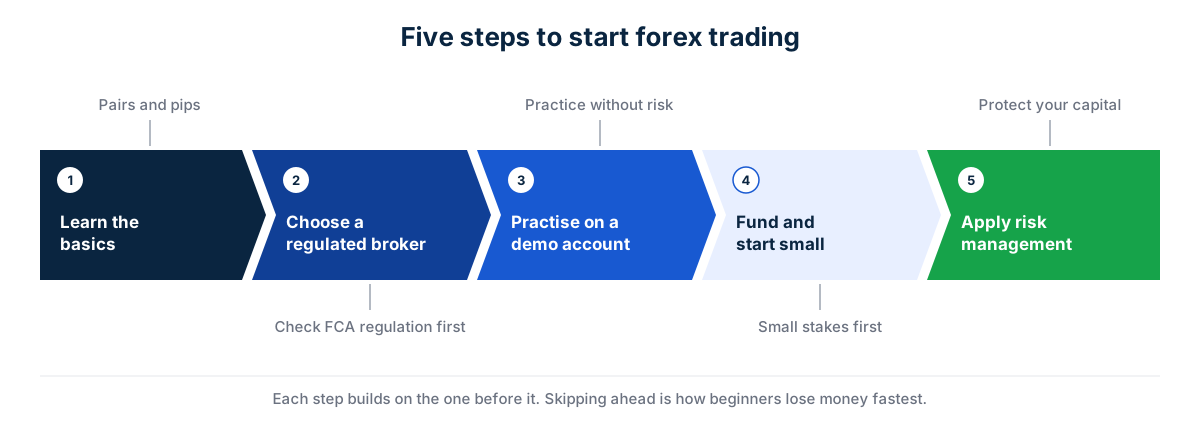
Minimum deposits range from nothing to a few hundred pounds. I would fund what you can afford to lose, not what unlocks a tier. The leverage caps above mean a small account still controls a meaningful position, and a meaningful loss, so size your first trades against the deposit, not the leverage.
A note on costs
Two numbers decide what trading costs you: the spread, quoted in pips, and the commission, charged per lot. A “zero commission” account usually carries a wider spread, and a raw-spread account usually adds commission, so I would always compare the total. We work both out in GBP for every broker and surface them on the lowest spread forex broker UK and lowest-commission pages.
Raw versus standard accounts, a worked comparison
One standard lot on EUR/USD costs the spread plus any commission. I would always calculate the total cost per lot for each account type. One pip is worth about $10, so the two account types compare like this (figures illustrative, at a GBP/USD rate near 1.27).
| One standard lot, EUR/USD | Standard account | Raw account |
|---|---|---|
| Spread | about 0.8 pips | from 0.0 pips |
| Commission | none | about £2.25 per side |
| All-in cost, round turn | about £6 in spread | about £4.50 in commission |
Raw pricing usually wins once you trade more than a handful of times a month, while a standard account can be simpler for occasional trades. The lowest spread and lowest commission guides run this test for every broker.
Our standards

Co-founder and CEO
David Levy leads our UK broker testing routed through London LD4 and has personally tested every FCA-regulated broker on this site.

Head of content and fact-checker
He signs off every figure on this site before publication.
Read the full testing model on methodology and the editorial standards on why we’re trustworthy.
FAQs
Is forex trading legal in the UK?
How do I check a broker is FCA-regulated?
Are forex profits taxed in the UK?
Why are some well-known brokers not listed?
Is my money safe with an FCA-regulated broker?
How is spread betting taxed differently to CFDs?
Related pages
About the author

Justin Grossbard is the co-founder and CEO at CompareForexBrokers. He has traded forex since 1998, leads UK broker research and has personally reviewed every FCA-regulated broker on this site. His work has appeared in Forbes, Kiplinger and Finance Magnates, and he holds a Bachelor of Commerce (Honours) and a Master of Marketing.