


All sections on this page
What are the nine best CFD brokers in the UK?
The nine picks below appear in ranking order. I have listed them first to ninth as our CFD Fit model places them. You can click through to each review.
1. Capital.com: learning-first CFD trading

CFDs carry high risk. Retail leverage is FCA-capped.
- Average spread
- 1.30 pips avg (Retail CFD), no commission
- Trading platforms
- Capital.com proprietary, MT4, TradingView
- Minimum deposit
- £20
- Regulation
- Capital Com (UK) Limited (FRN 793714)
◎ Standout: the strongest built-in learning tools of any broker here, on a proprietary AI platform plus MT4 and TradingView
Why higher here? CFD Fit weighs cost, market range, platform fit and account structure, which lifts Capital.com above its #4 sitewide position. See the ranking method ↓
Why we recommend Capital.com
Capital Com (UK) Limited tops our CFD Fit ranking because it balances a broad 5,500+ UK market range with a learning-first proprietary platform, MT4 and TradingView, spread-only pricing and a £20 entry. IG, City Index and XTB list wider raw ranges, yet I think Capital.com wins on platform experience and accessibility for most UK traders.
The trade-off is depth of platform choice: there is no MT5 or cTrader, and pricing is dynamic and spread-only with no published minimum spread. Our tested EUR/USD, GBP/USD and EUR/GBP average, recorded by David Levy on live UK accounts in July 2026, came in at 1.30 pips, mid-field for a spread-only book. If you need MT5 or cTrader, you will need to look elsewhere.
Pros & cons
- Broad 5,500+ UK market range
- Strongest built-in learning tools: Investmate, in-app lessons and an AI pattern tool
- Proprietary AI platform plus MT4 and TradingView
- Low £20 entry (£50 by wire)
- No MT5 or cTrader
- Dynamic spread-only pricing with no published minimum spread
- Tested 1.30 pips is mid-field, not the tightest here
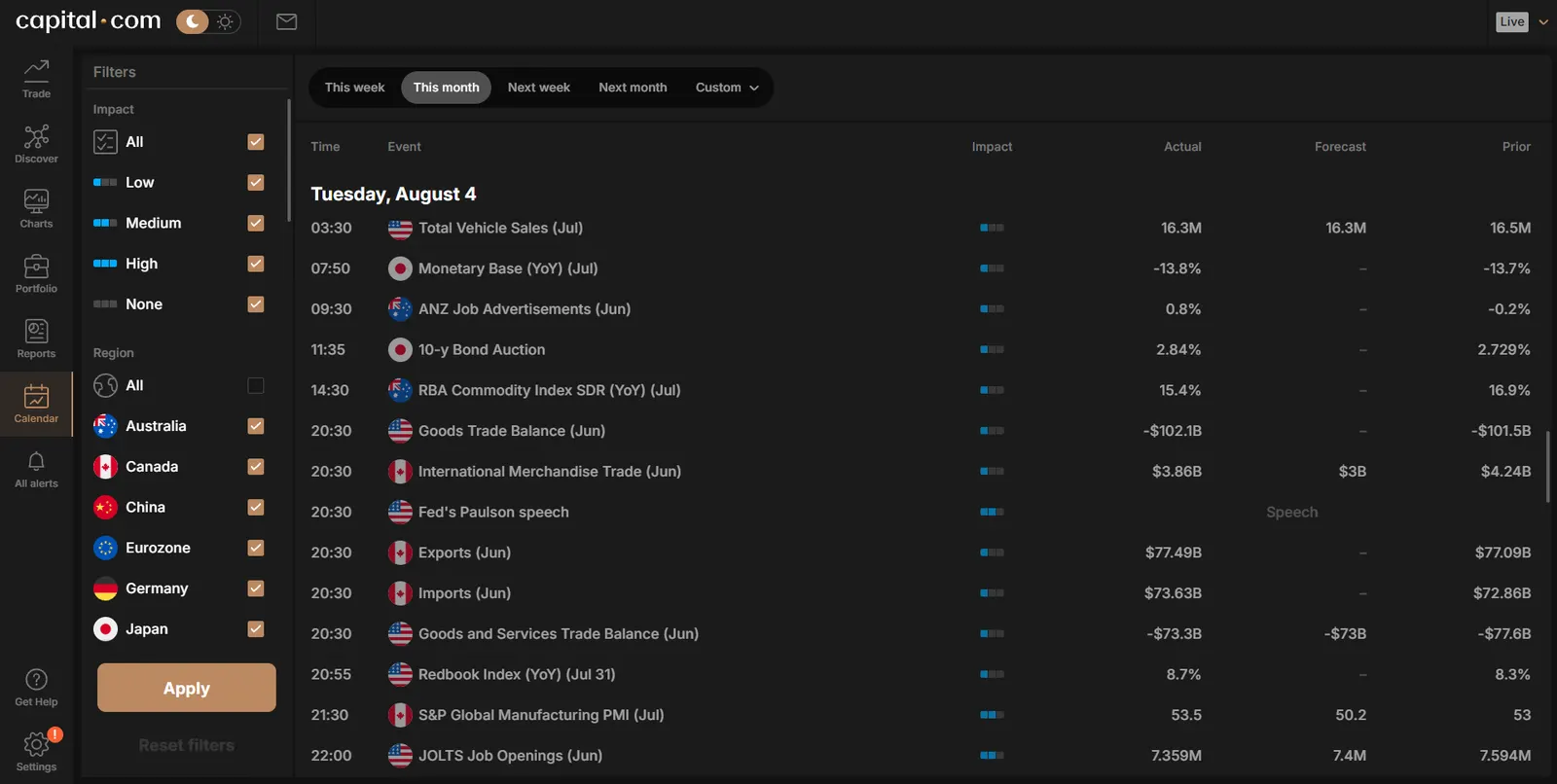
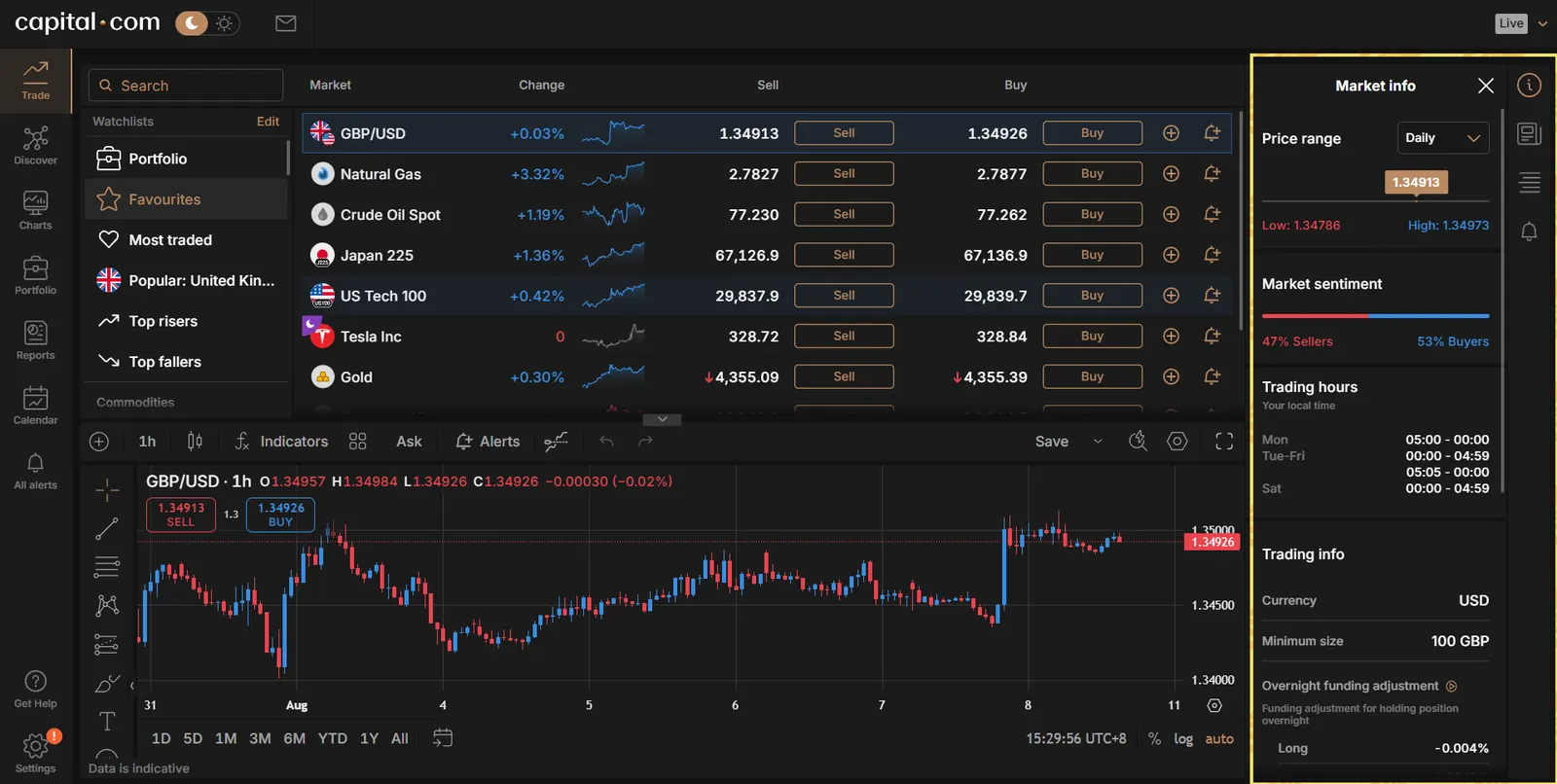
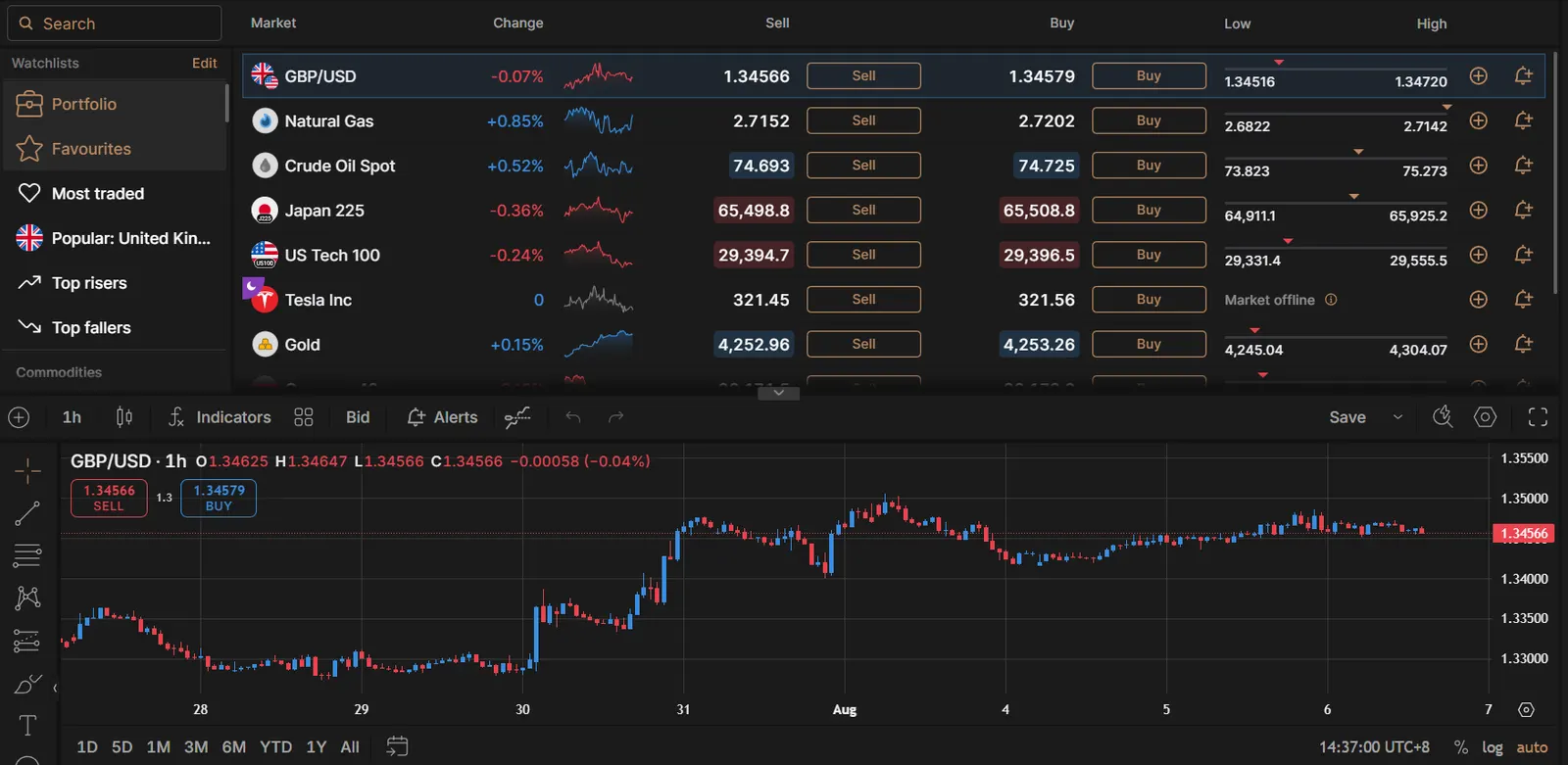
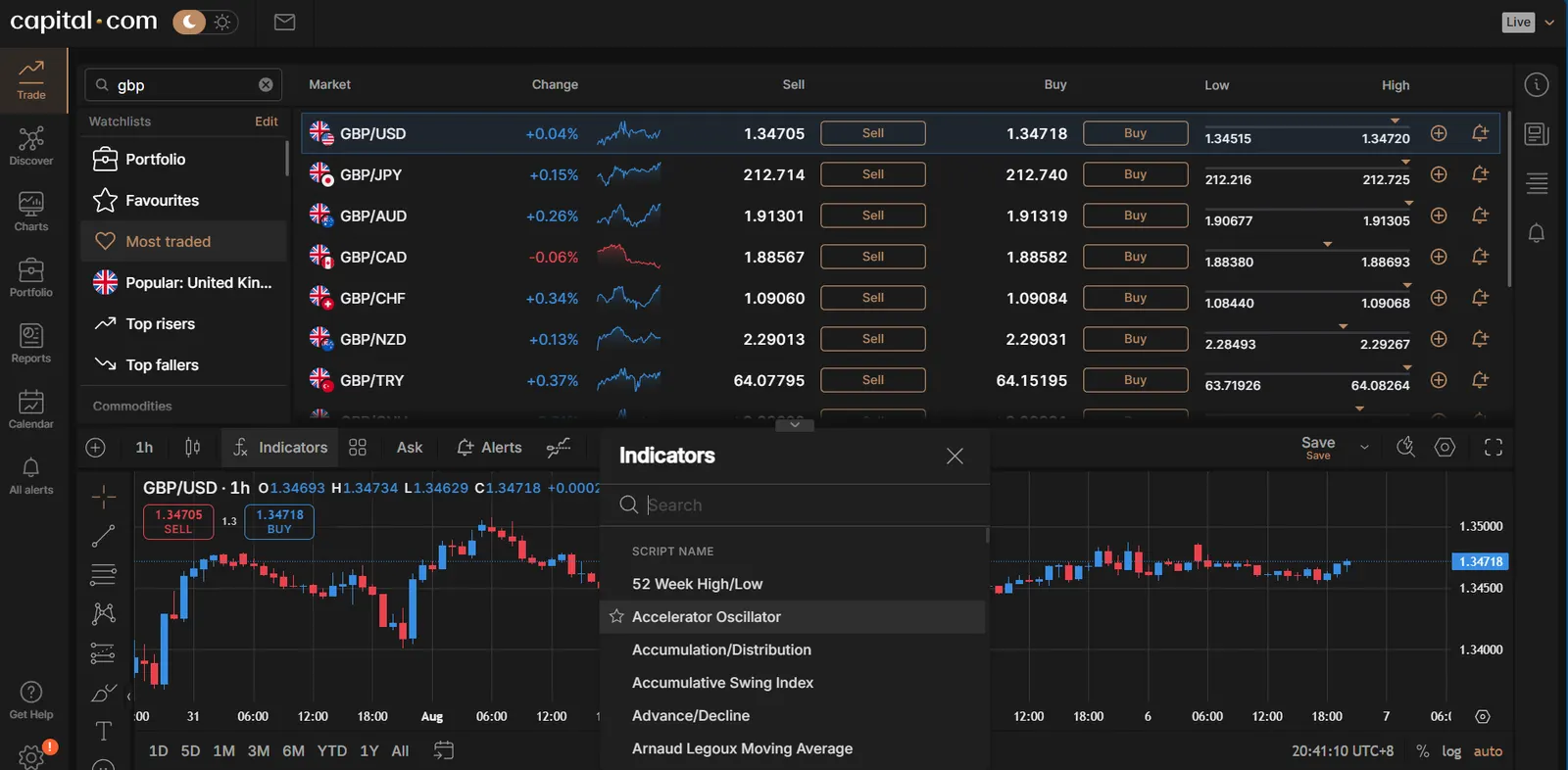
Capital.com screenshots
2. Pepperstone: top-rated overall for UK CFD traders

CFDs carry high risk. Retail leverage is FCA-capped.
- Average spread
- 0.17 pips avg (Razor) plus £2.25 per side on MT4 and MT5
- Trading platforms
- MT4, MT5, cTrader, TradingView
- Minimum deposit
- £10
- Regulation
- Pepperstone Limited (FRN 684312)
◎ Standout: the only broker in this set whose single raw account carries all four third-party platforms
Why we recommend Pepperstone
Pepperstone Limited pairs raw-spread pricing with the widest platform choice of any FCA broker we rank. The Razor account averaged 0.17 pips across three major pairs in David Levy's July 2026 live UK capture, plus a fixed £2.25 per side, and you can run that same account on MT4, MT5, cTrader or TradingView. Our UK review scored it 90 out of 100. Pepperstone remains our top-rated UK broker overall at 90/100, and it sits second here because CFD Fit weighs cost, range, platform fit and account structure together rather than leading on cost alone.
The trade-off is product breadth. Its CFD range is narrower than CMC's or IG's, and its share CFDs lean toward US and global stocks rather than the London market. Pepperstone publishes a retail loss figure of 72.9%, in line with the rest of this set. If you want the deepest single-stock or index menus, I would compare the two market makers ranked below.
Pros & cons
- Razor raw pricing averages 0.17 pips across three pairs
- Four platforms on a single account
- £2.25 per side on a GBP Razor account, on MT4 and MT5
- Narrower CFD range than CMC or IG
- Commission applies on the Razor account
- No ISA or underlying share dealing
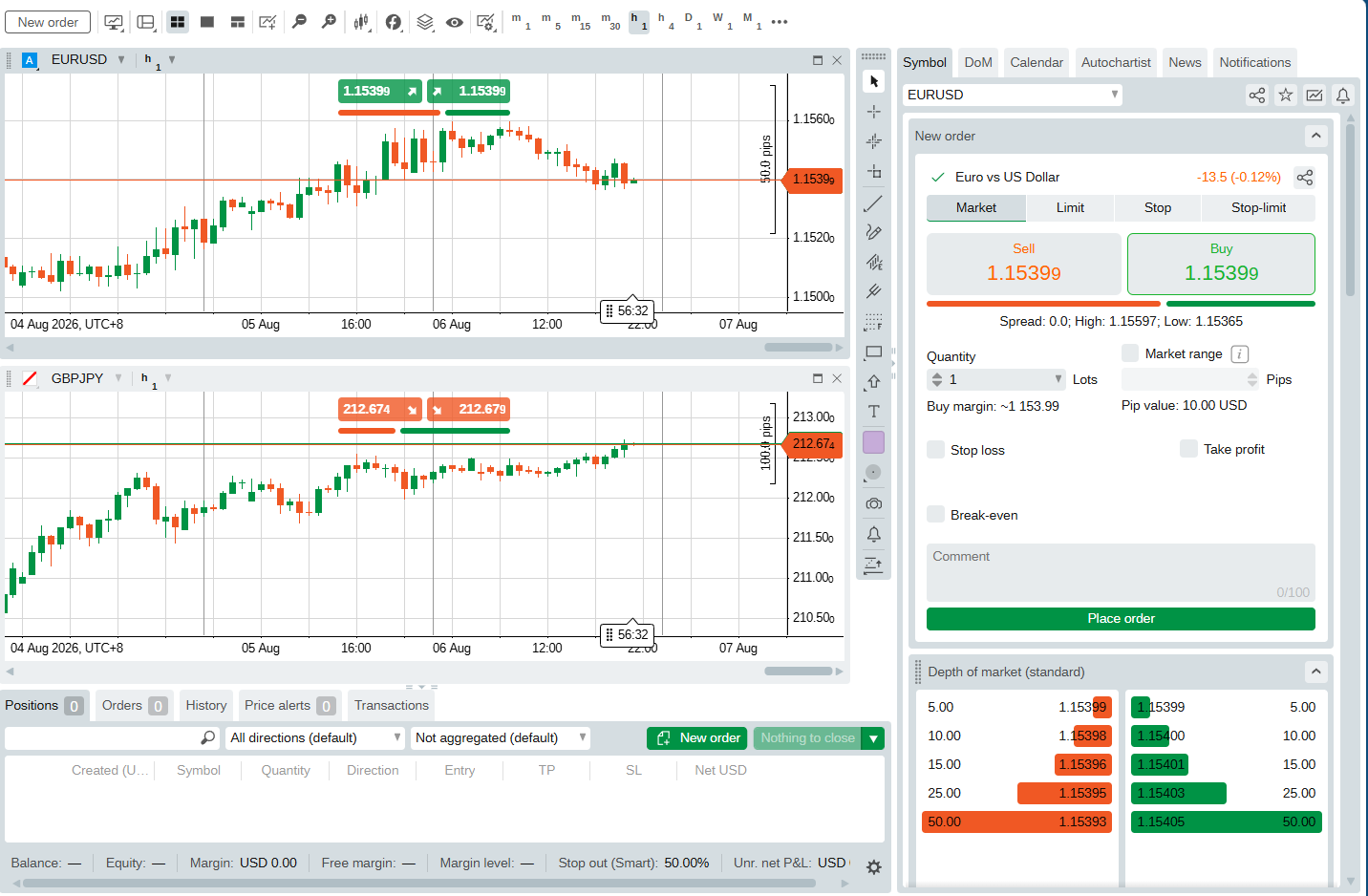
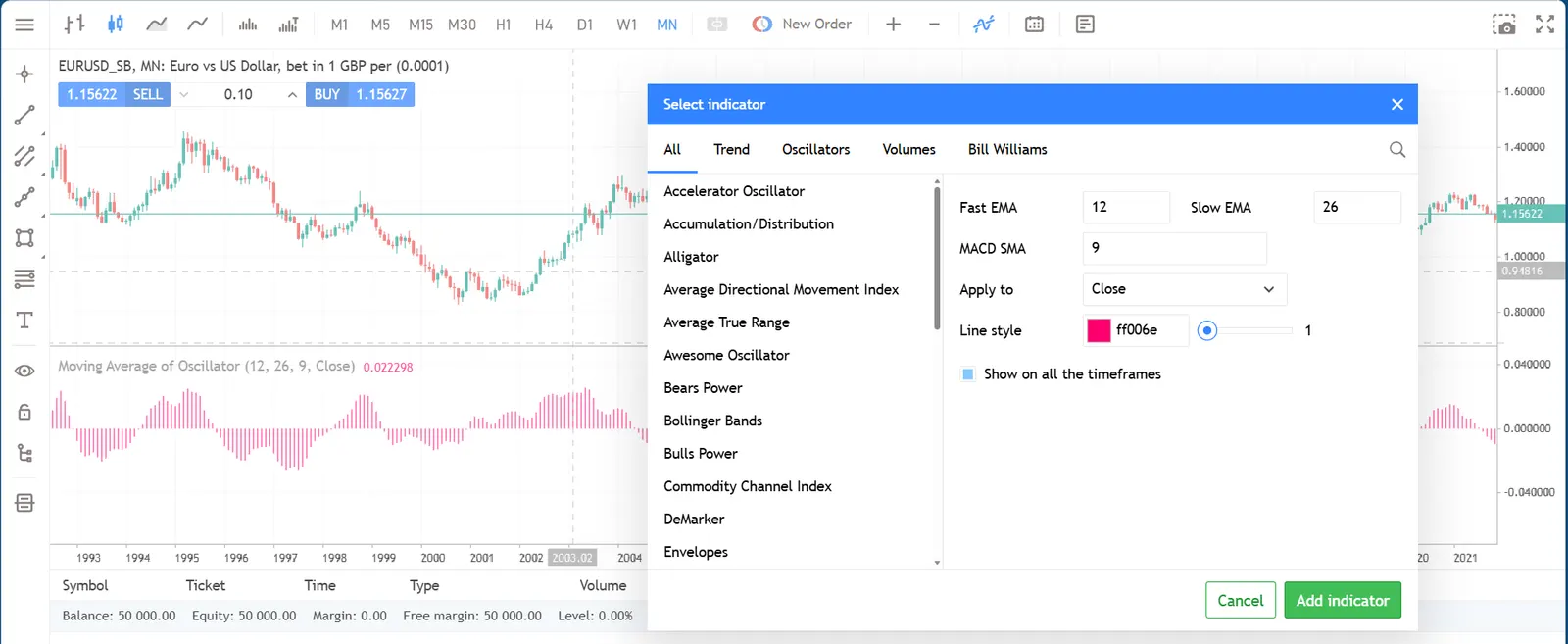
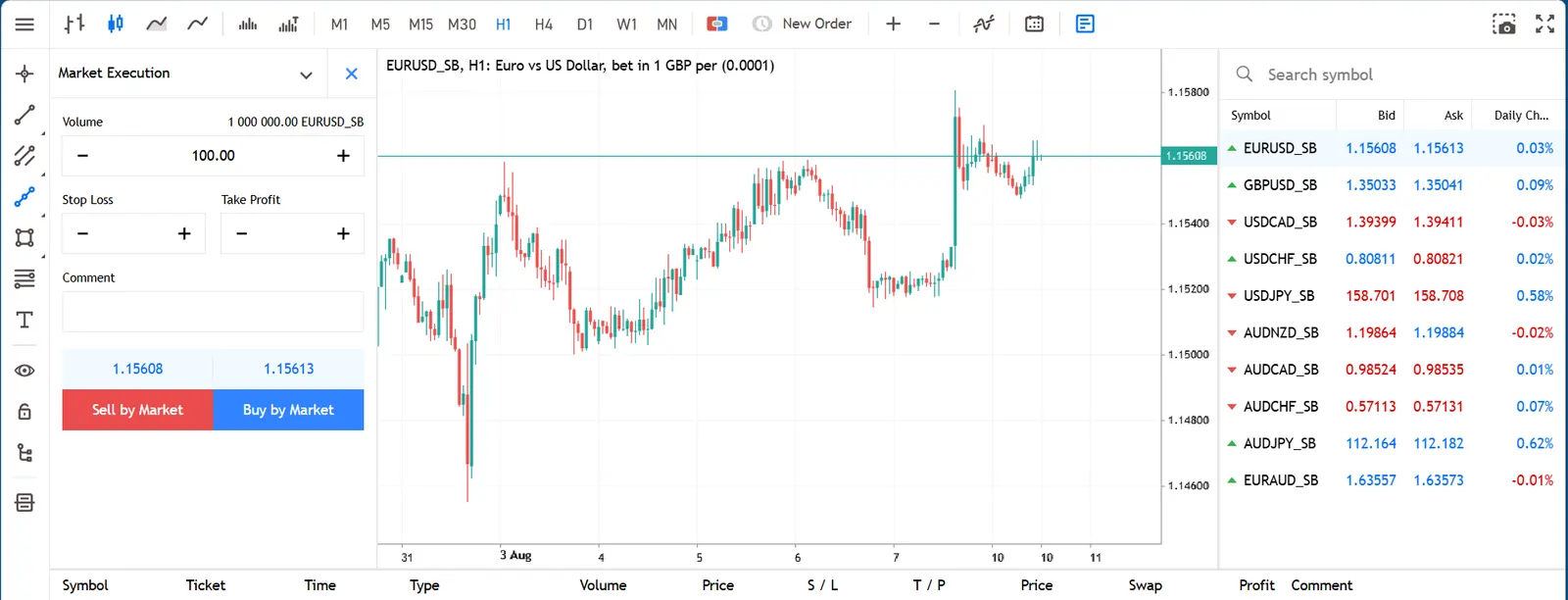
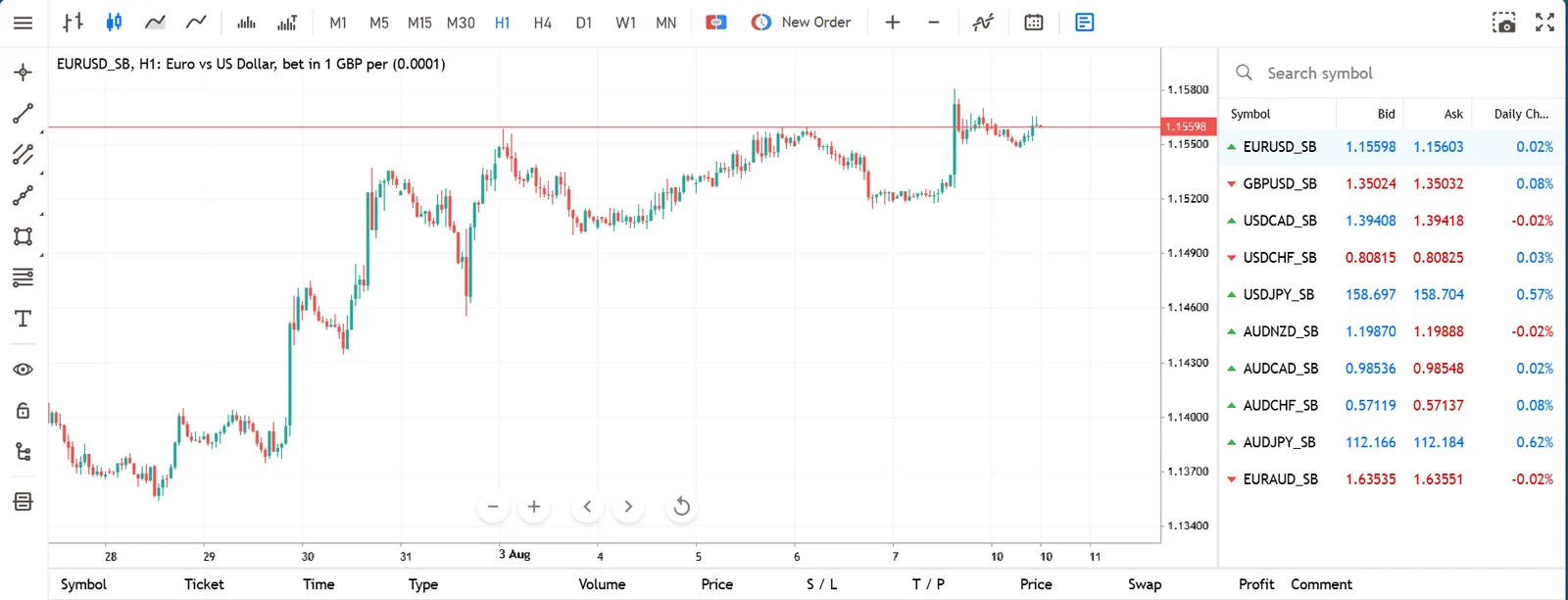
Pepperstone screenshots
3. Spreadex: one cross-margined login across CFDs and spread bets

CFDs carry high risk. Retail leverage is FCA-capped.
- Average spread
- 0.97 pips avg (CFD / FX account)
- Trading platforms
- Spreadex platform, TradingView
- Minimum deposit
- £5
- Regulation
- Spreadex Limited (FRN 190941)
◎ Standout: matched advertised FX floors on the spread bet and CFD books, on one cross-margined login
Why higher here? CFD Fit weighs cost, account structure and platform fit alongside range, which lifts Spreadex above its #16 sitewide position despite the narrowest market range in this group. See the ranking method ↓
Why we recommend Spreadex
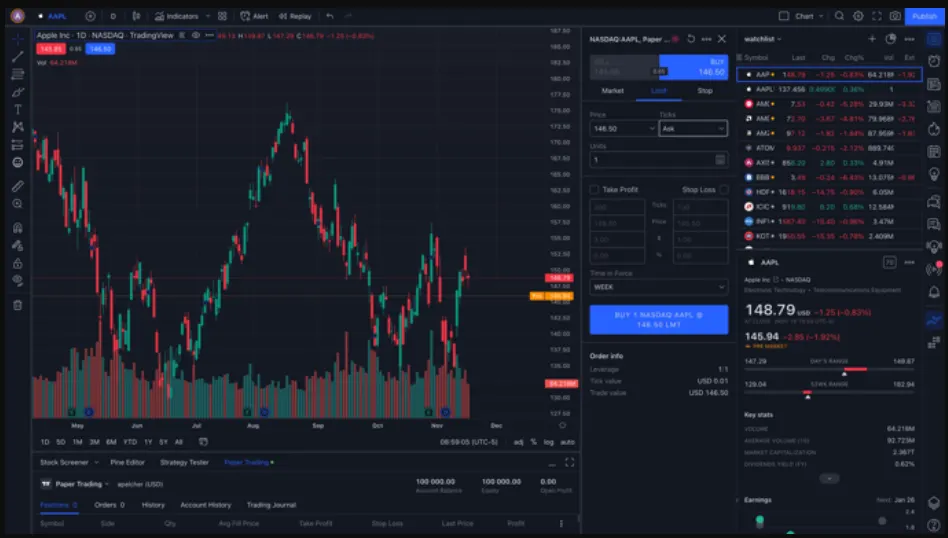
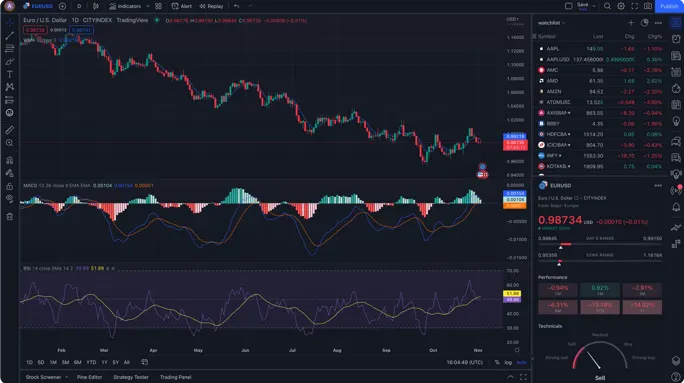
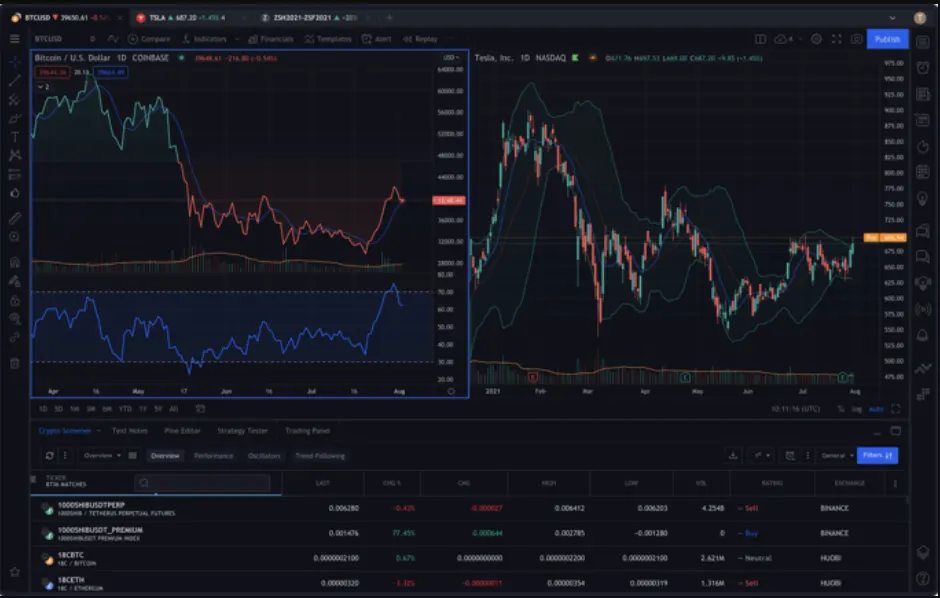
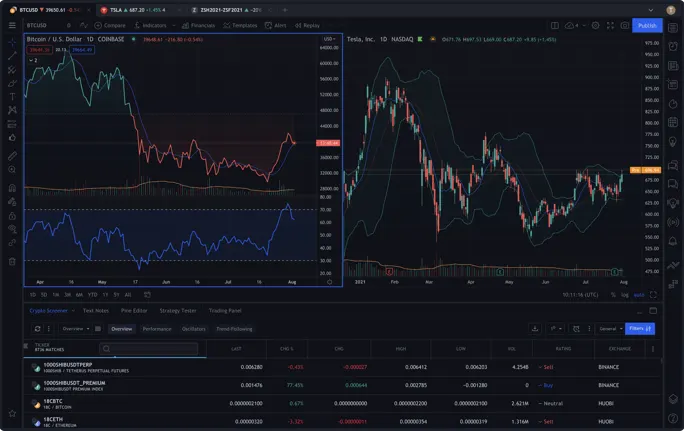
Spreadex offers 4,328 instruments to UK retail clients on an underlying basis, counting each equity once, across 20,362 tradeable contracts (Spreadex, August 2026). That is the narrowest range in this top group, and it is the figure the broker itself confirmed to us in writing after telling us its published "over 10,000 markets" could not be reconciled with either of its own counts. What lifts Spreadex to third is not range. It is cost and account structure: a tested 0.97 pip three-pair average with no commission on FX, a £5 minimum, free standard deposits and withdrawals, no inactivity fee, and no conversion mark-up at trade level on a non-GBP position.
The two books price alike on FX. Spreadex publishes 0.6 points on EUR/USD and 0.9 on GBP/USD and EUR/GBP on both its spread-betting and CFD market information tables (Spreadex market information, accessed 6 August 2026), and our own July sampling recorded a matching 0.8 modal on each. Several brokers here run both products; what is specific to Spreadex is that the advertised FX floor does not change between them.
The two books price alike on FX, and that is the claim this position rests on. Spreadex publishes 0.6 points on EUR/USD and 0.9 on GBP/USD and EUR/GBP on both its spread-betting and CFD market information tables, and David Levy's July 2026 live capture recorded a matching 0.967 pip three-pair average on each. Several brokers here run both products; what is specific to Spreadex is that the advertised FX floor does not change between them, and that the two accounts are cross-margined, so equity works across the pair rather than sitting stranded on one side.
The trade-offs are real. Its 0.97 pip average sits behind the raw accounts above it, its Overall score of 76 is the lowest in this top group, its market range is the narrowest here, and platform choice is limited to the broker's own software or TradingView with no MetaTrader or cTrader. There is also no demo account, so you cannot trial the platform without funding one. If you want both books under one login on matched FX pricing, Spreadex is the only broker here that gives you that.
Pros & cons
- Same advertised FX floors on spread bets and CFDs
- Spread bet and CFD accounts cross-margined under one login
- Native TradingView execution on both books
- £5 minimum, free standard deposits and withdrawals
- No conversion mark-up at trade level, at close or on financing
- No demo account, so it cannot be trialled without funding
- No MT4, MT5 or cTrader
- Share CFDs carry 0.1% commission
- 4,328 instruments is the narrowest range in this top group
- Overall score of 76 is the lowest in this top group
Spreadex screenshots
4. IG Markets: the widest raw market range

CFDs carry high risk. Retail leverage is FCA-capped.
- Average spread
- 1.50 pips avg (IG Trading)
- Trading platforms
- IG platform, MT4, ProRealTime
- Minimum deposit
- None published
- Regulation
- IG Markets Limited (FRN 195355)
◎ Standout: trading since 1974, the longest UK regulatory record in this set, under an LSE-listed parent
Why higher here? CFD Fit weighs cost, market range, platform fit and account structure, which lifts IG Markets above its #9 sitewide position. See the ranking method ↓
Why we recommend IG Markets
IG Markets Limited offers some of the deepest overall market access in this set. You can trade index, share, commodity and bond CFDs on one account. Its track record runs back to 1974, the longest here, and the parent is listed on the London Stock Exchange.
Headline FX spreads sit wider than Pepperstone's raw pricing, and the platform set omits MT5 and cTrader. If you want breadth and a long track record over the tightest majors pricing, you will find IG hard to beat. Traders who need MT5 or cTrader should look elsewhere.
Pros & cons
- One of the deepest market ranges here
- Longest UK regulatory record
- Strong research and charting
- Wider FX spreads than a raw account
- No MT5 or cTrader
- Platform depth suits committed traders
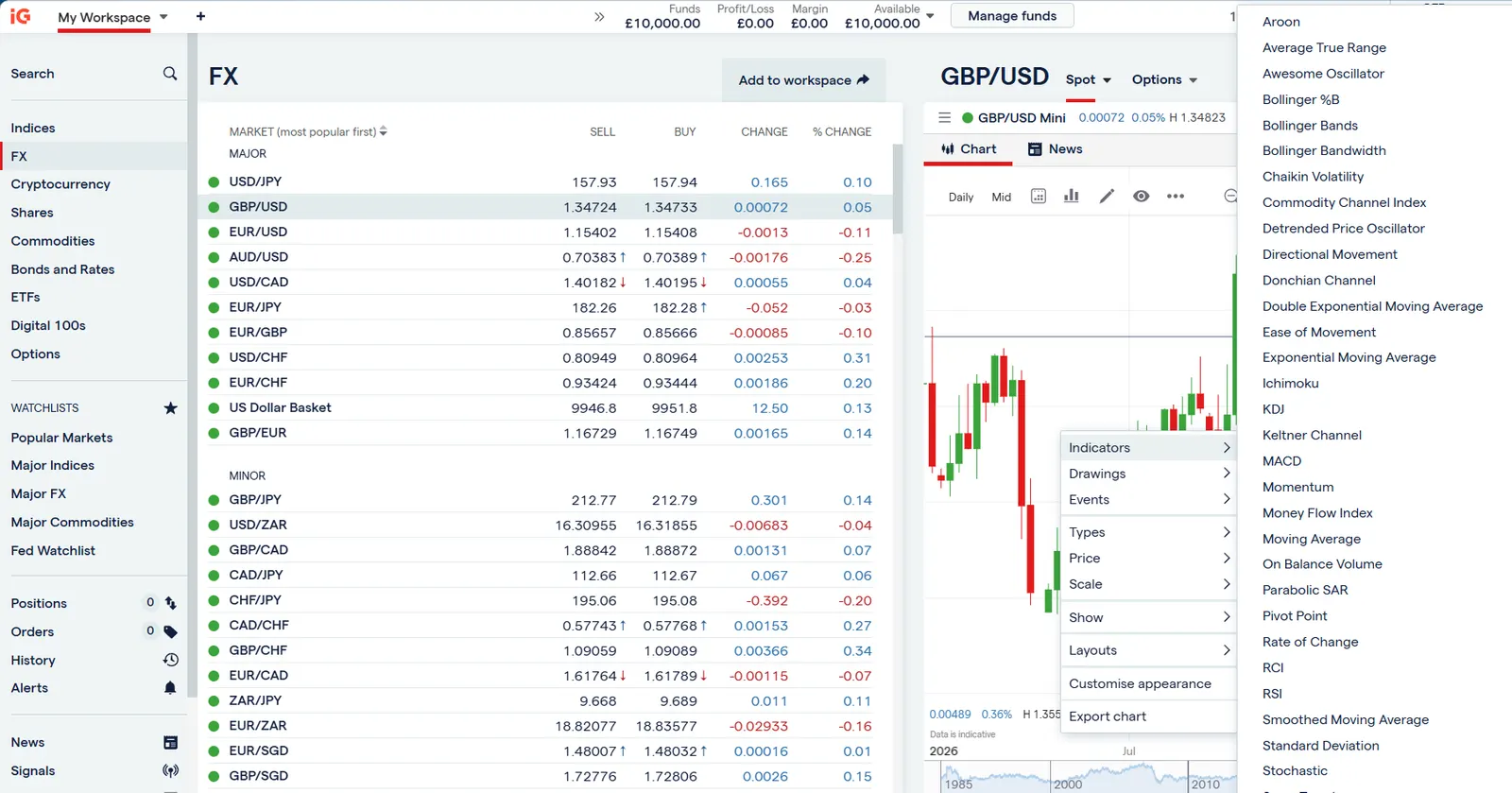
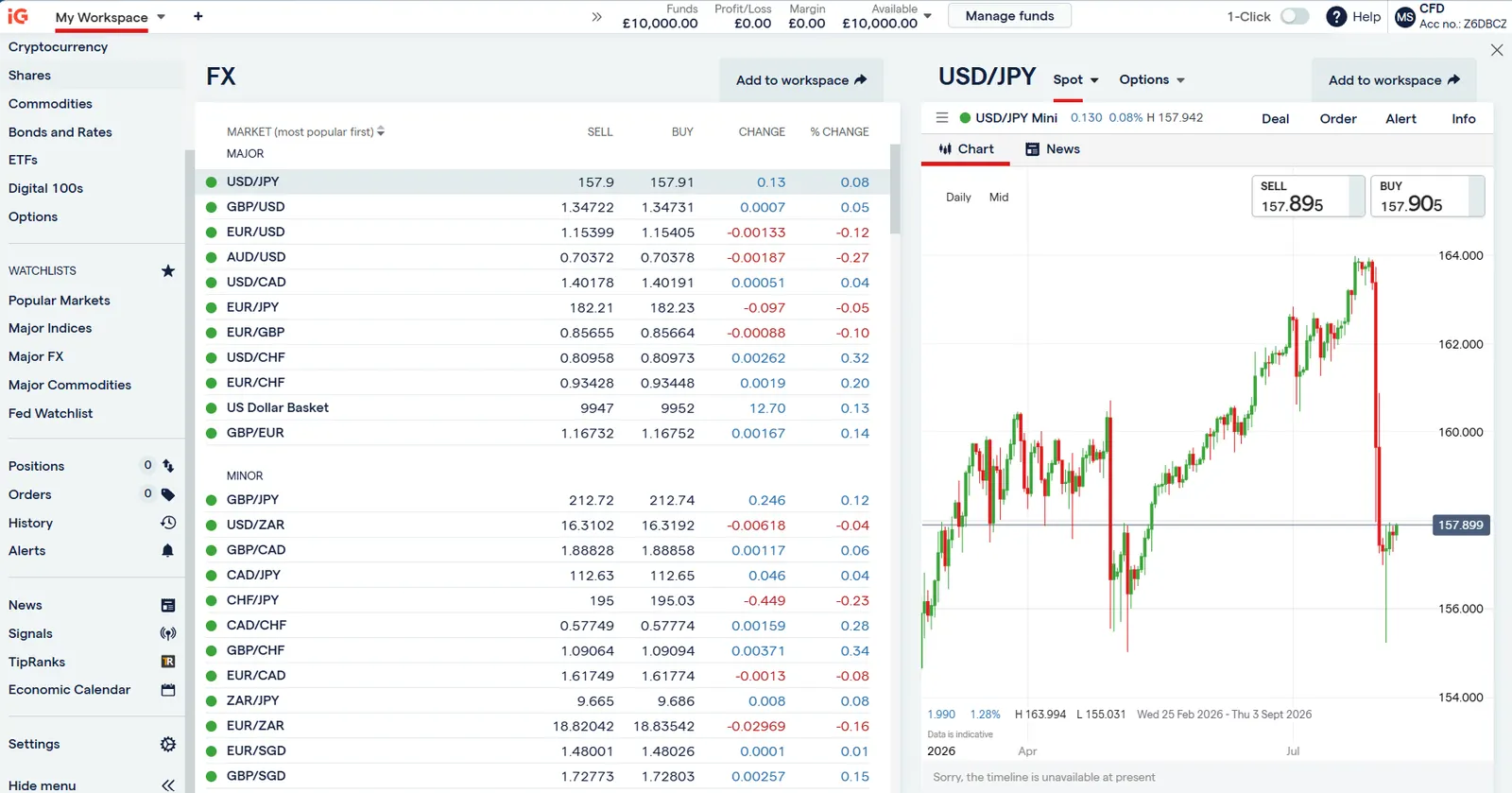
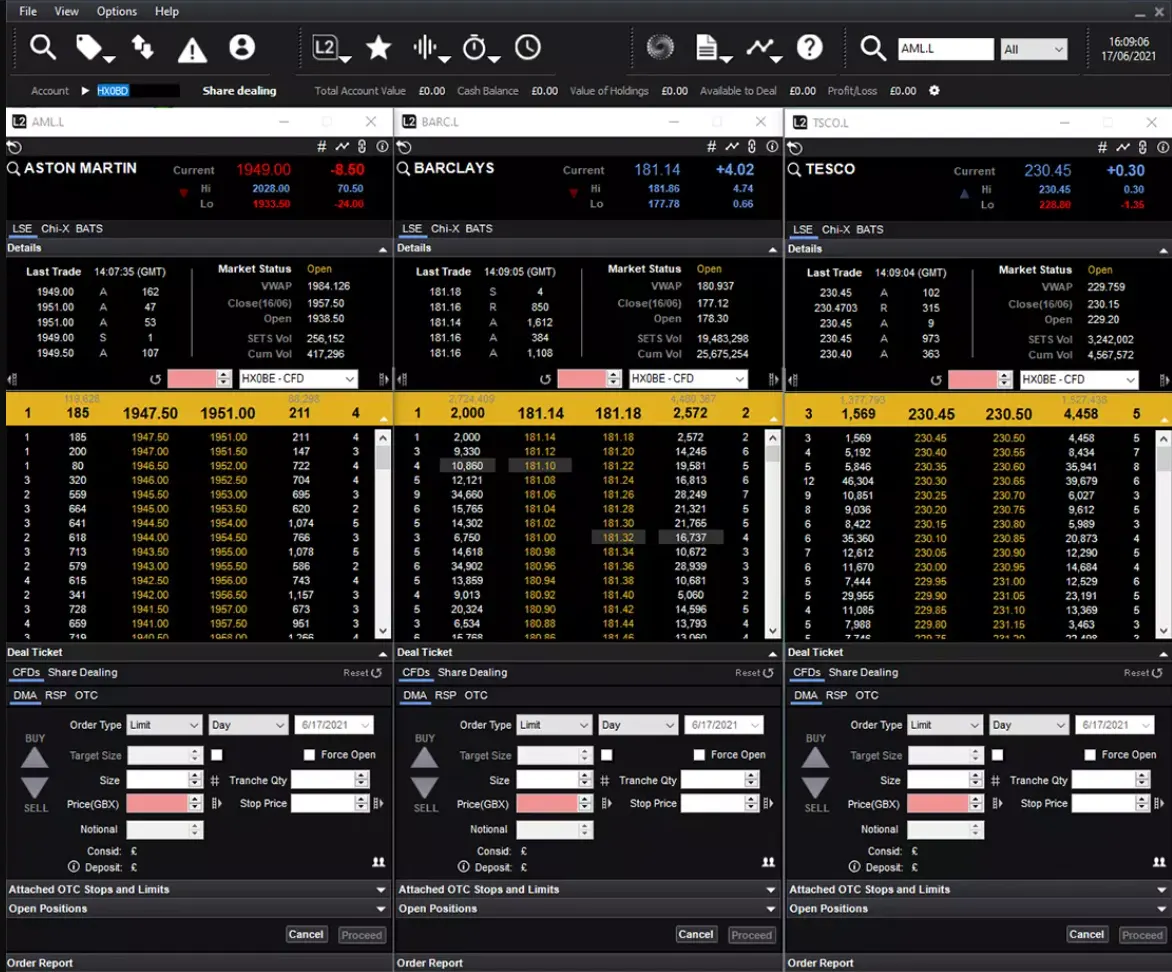
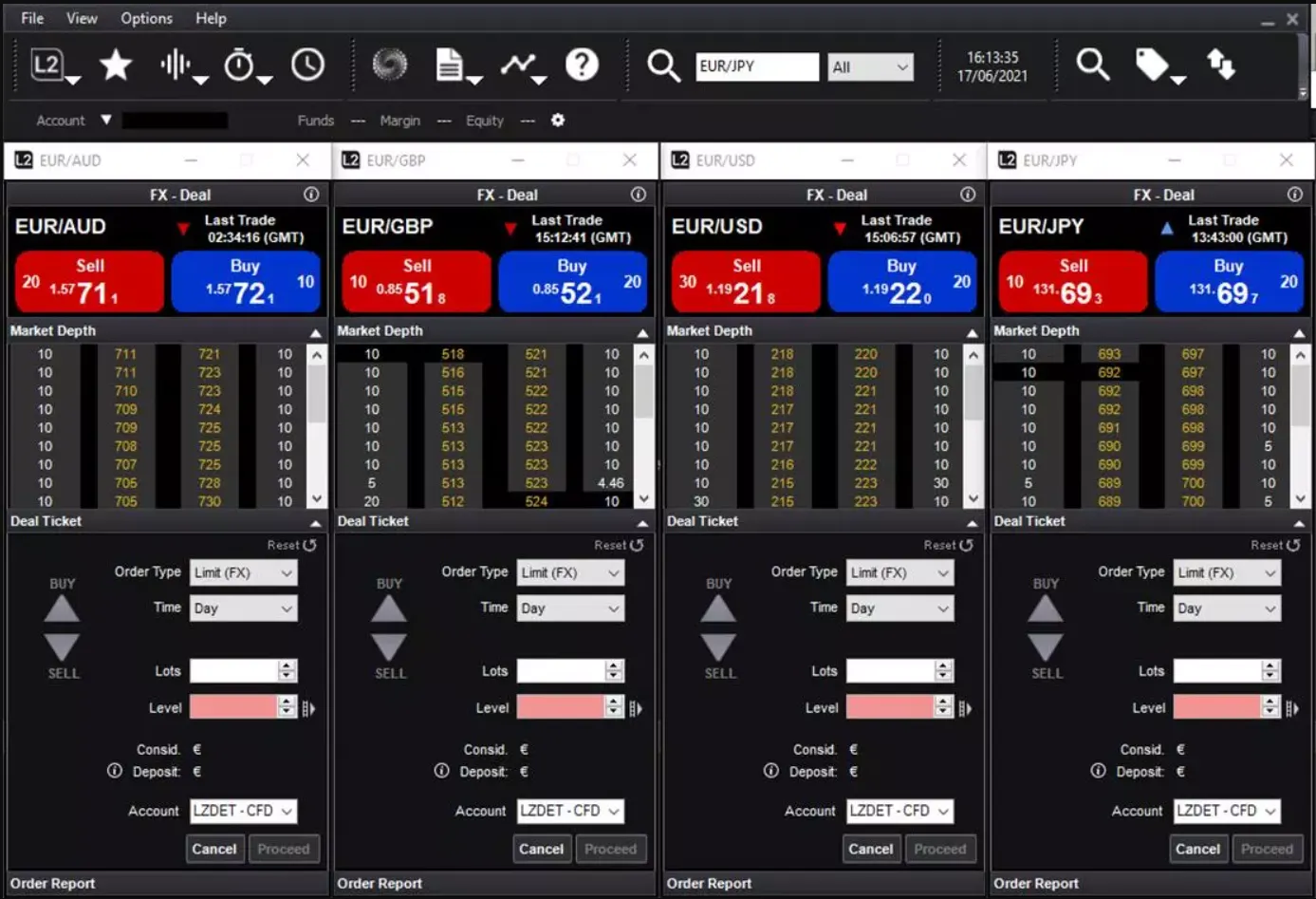
IG Markets screenshots
5. CMC Markets: a standout proprietary platform

CFDs carry high risk. Retail leverage is FCA-capped.
- Average spread
- 1.26 pips avg (Standard)
- Trading platforms
- Next Generation, MT4
- Minimum deposit
- £0
- Regulation
- CMC Markets UK plc (FRN 173730)
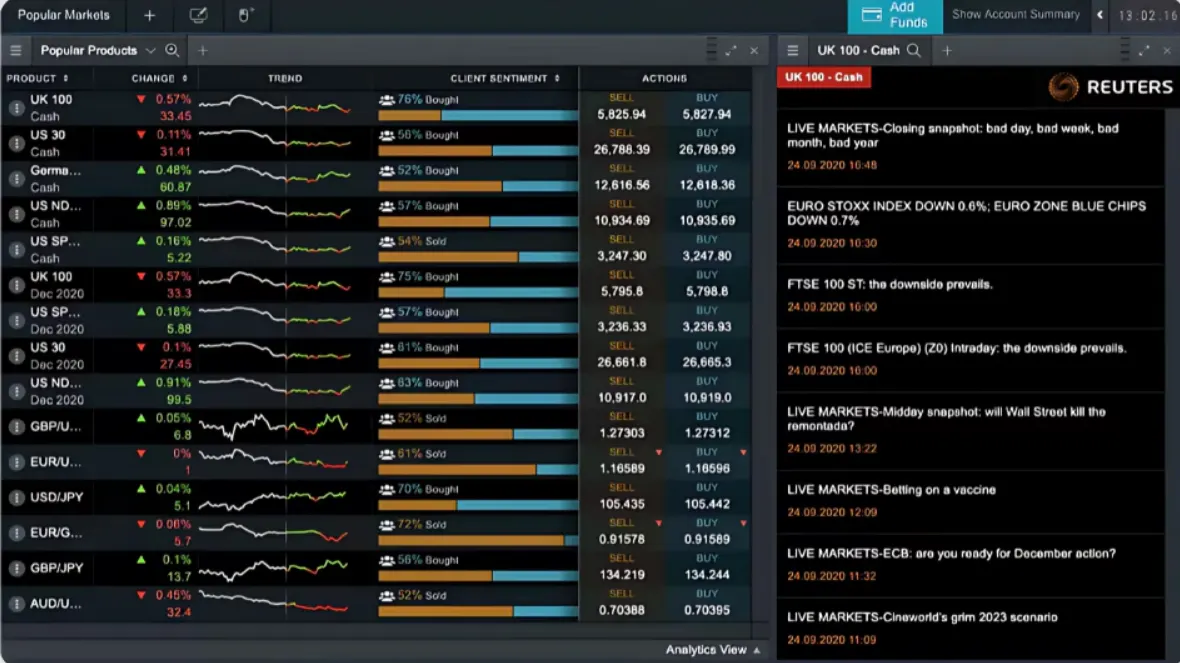
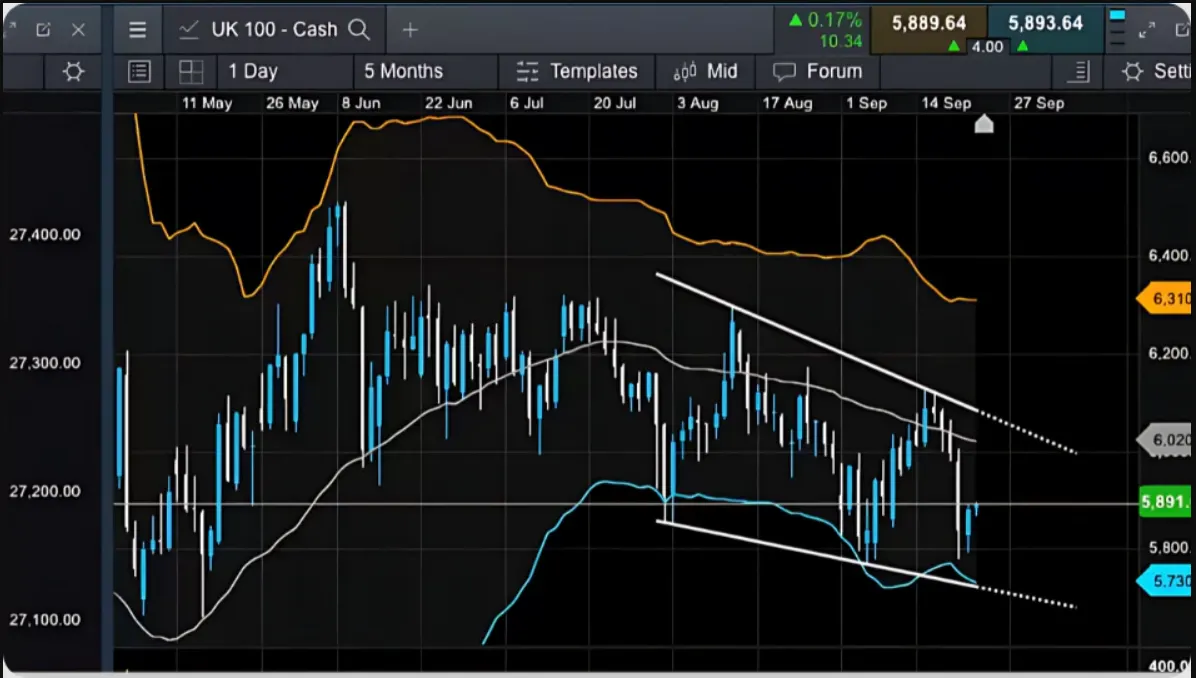
◎ Standout: a proprietary platform, Next Generation, built around advanced charting for chart-led traders
Why we recommend CMC Markets
CMC Markets UK plc is the platform pick. Next Generation gives you a broad menu of CFD instruments across indices, shares, commodities, treasuries and FX, spread-only with no dealing commission outside share CFDs. The firm has been trading since 1989 and its parent is listed on the London Stock Exchange.
The platform is proprietary, so MetaTrader coverage is limited to FX and index CFDs, and raw-spread scalpers will find Pepperstone cheaper on majors. If you value one deep multi-asset platform over the tightest FX pricing, you will find CMC the stronger fit. Traders who need MetaTrader beyond FX and index CFDs should look elsewhere.
Pros & cons
- One of the widest instrument menus in the set
- Strong proprietary charting
- LSE-listed parent as a structural signal
- No MT5 or cTrader
- Market-maker spread carries the cost outside share CFDs
- Platform has a learning curve
CMC Markets screenshots
6. City Index: established multi-asset range

CFDs carry high risk. Retail leverage is FCA-capped.
- Average spread
- 1.73 pips avg (Web Trader)
- Trading platforms
- Web Trader, TradingView, MT4
- Minimum deposit
- £0
- Regulation
- StoneX Financial Ltd (FRN 446717)
◎ Standout: a long-running multi-asset CFD range under StoneX, a NASDAQ-listed parent
Why higher here? CFD Fit weighs cost, market range, platform fit and account structure, which lifts City Index above its #12 sitewide position. See the ranking method ↓
Why we recommend City Index
City Index, the retail brand of StoneX Financial Ltd, covers indices, shares, FX and commodities with per-market pricing close to IG's. It suits traders who want an established multi-asset book with TradingView connectivity.
Its spread figure is a tested three-pair average recorded by David Levy on live UK accounts in July 2026, mid-field for a spread-only book. City Index and Forex.com share the StoneX parent, so I would compare the two before you open with either.
Pros & cons
- Broad multi-asset range
- TradingView connectivity
- StoneX backing
- Spread-only pricing, no raw account
- Overlaps with sister brand Forex.com
- Fewer platforms than Pepperstone
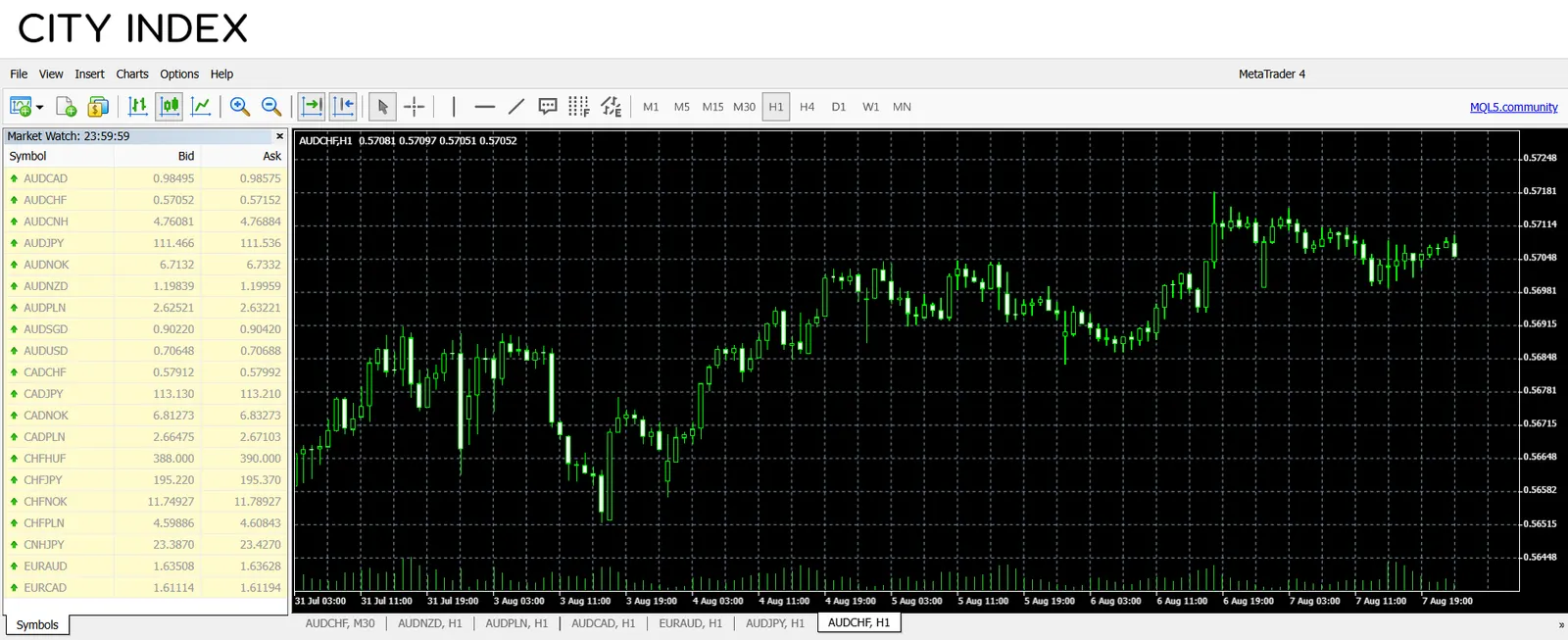
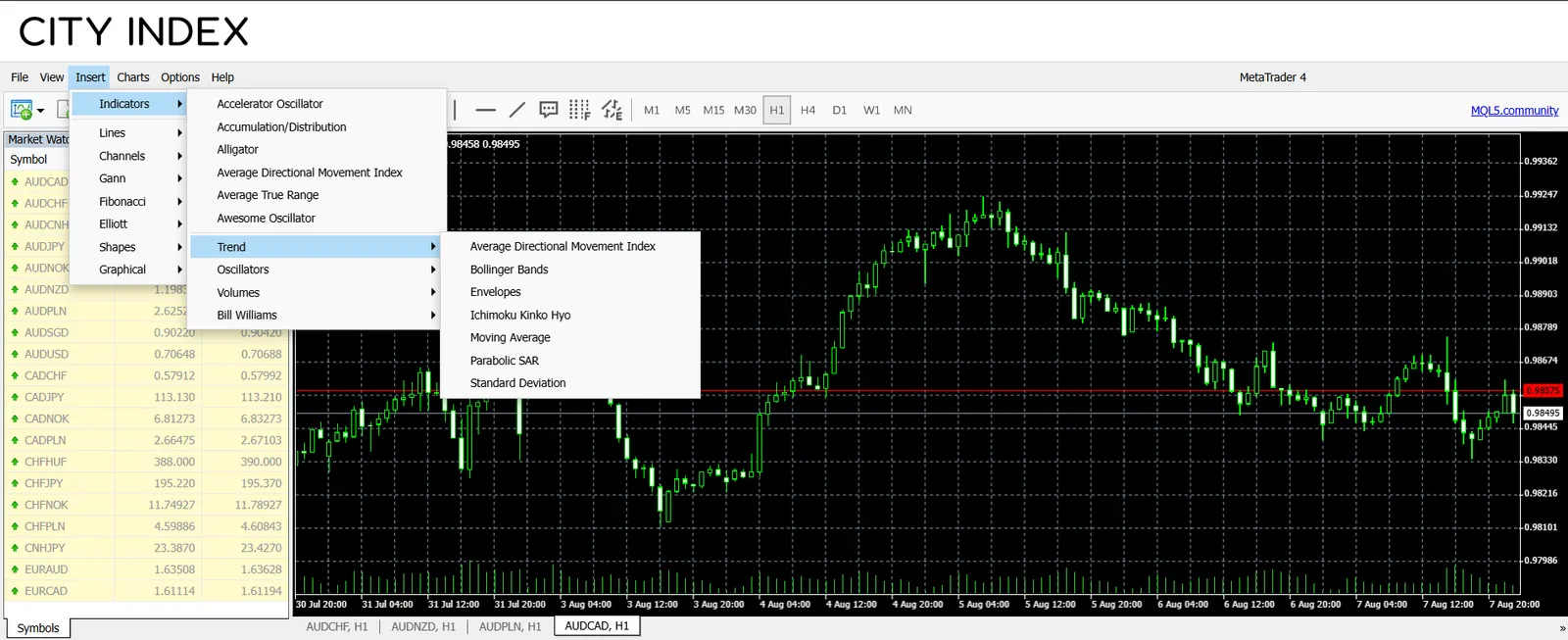
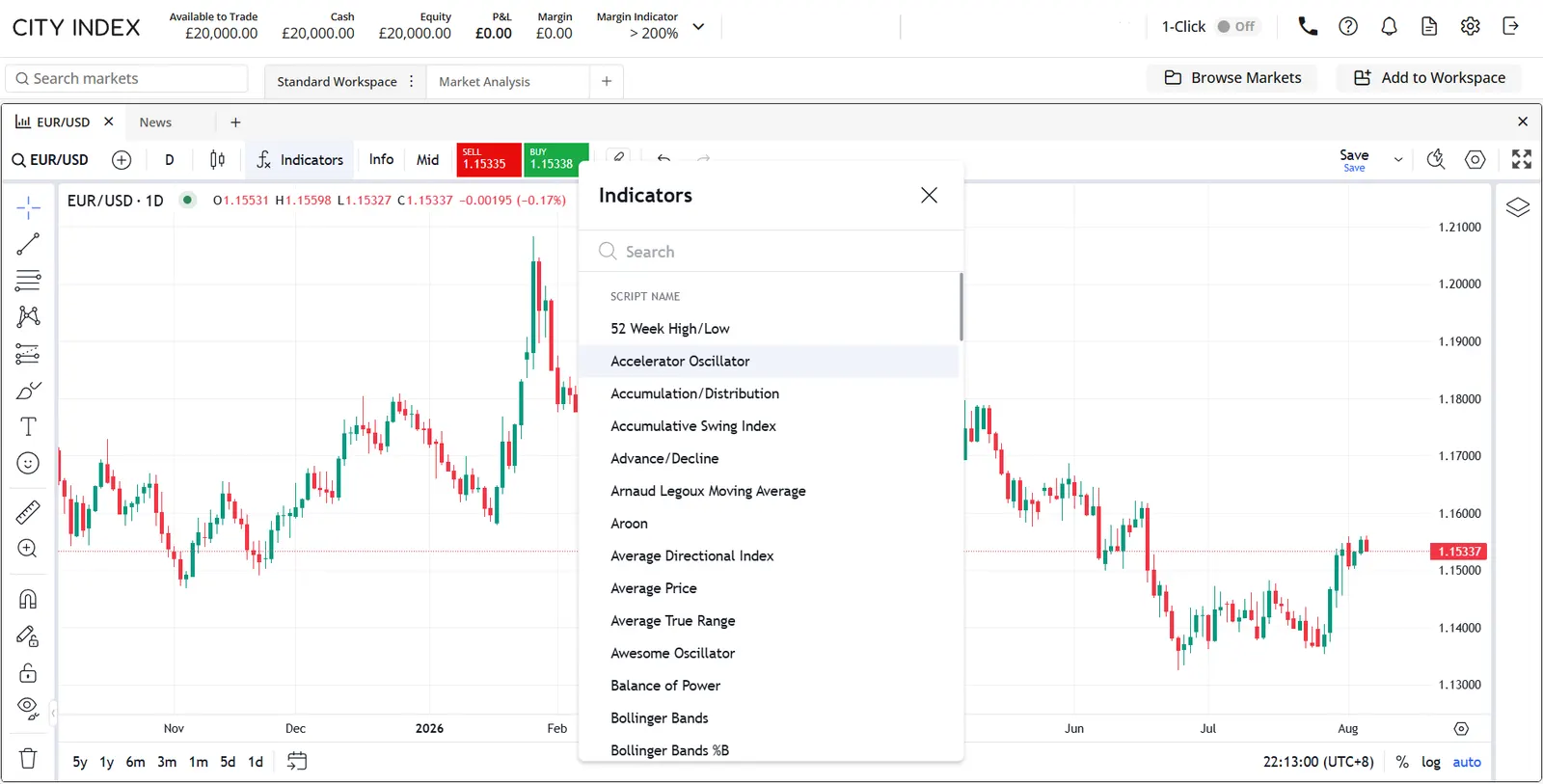
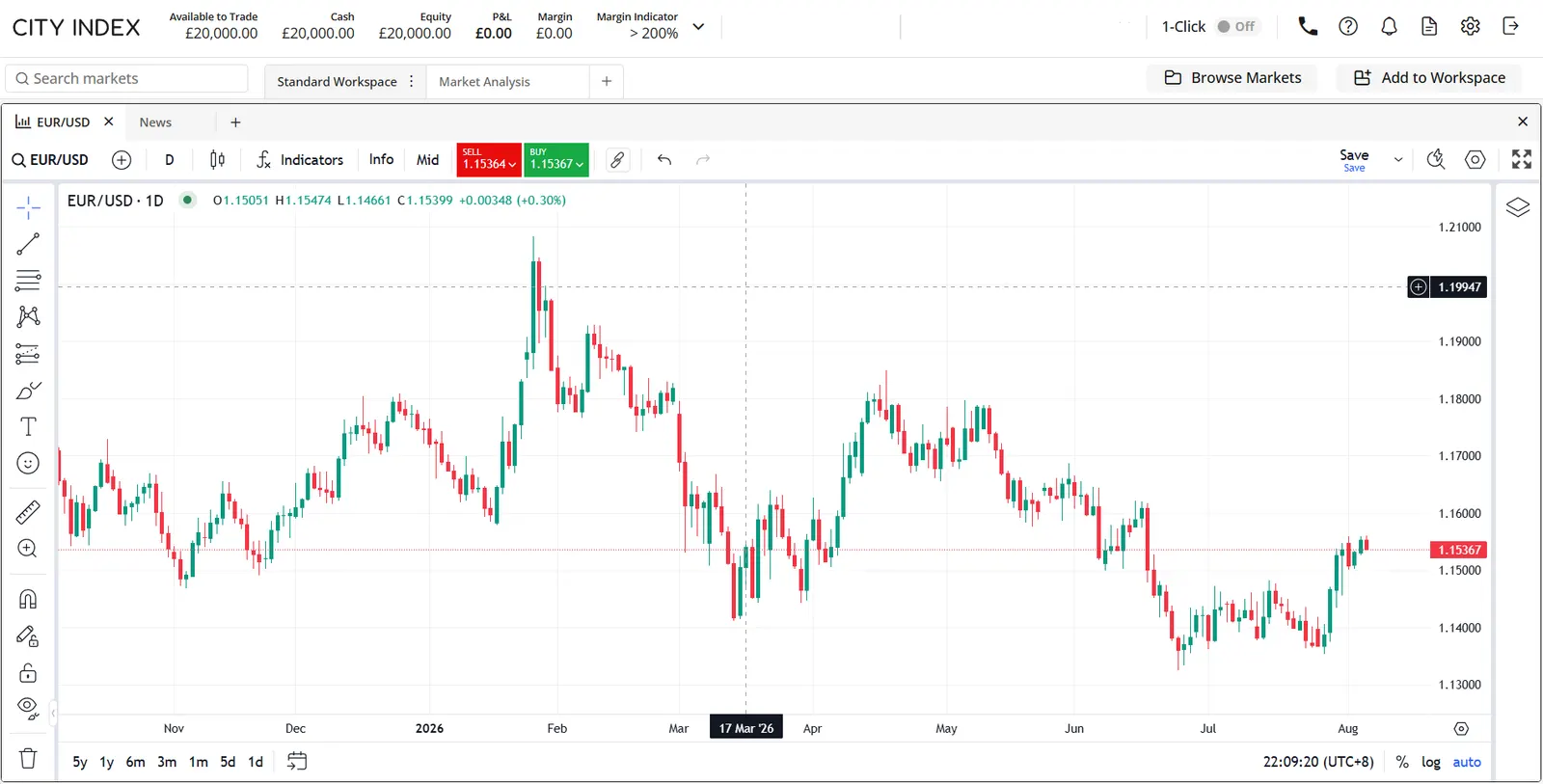
City Index screenshots
7. XTB: large index and ETF menu on xStation

CFDs carry high risk. Retail leverage is FCA-capped.
- Average spread
- 0.91 pips avg (Standard)
- Trading platforms
- xStation 5
- Minimum deposit
- £0
- Regulation
- XTB Limited (FRN 522157)
◎ Standout: a large index and ETF CFD menu on a well-built proprietary platform
Why higher here? CFD Fit weighs cost, market range, platform fit and account structure, which lifts XTB above its #14 sitewide position. See the ranking method ↓
Why we recommend XTB
XTB Limited runs everything through xStation 5, its own platform, and you get one of the larger index and ETF CFD ranges of the FCA set. Pricing is floating spread with no separate commission on most markets.
XTB removed MetaTrader 4 support, so I would direct MT4 traders elsewhere. If you are happy on a single strong proprietary platform, the index and ETF coverage is the draw. Compare that coverage against your watchlist before you open an account.
Pros & cons
- Large index and ETF CFD range
- Well-built proprietary platform
- Floating spread with no separate commission on most markets
- No MetaTrader or cTrader
- Spread-only pricing wider than raw on majors
- Single-platform lock-in
8. Plus500: clean spread-only platform

CFDs carry high risk. Retail leverage is FCA-capped.
- Average spread
- 1.23 pips avg (Retail CFD)
- Trading platforms
- Plus500 web and app
- Minimum deposit
- £100
- Regulation
- Plus500UK Ltd (FRN 509909)
◎ Standout: a single streamlined platform with spread-only pricing and no separate commission
Why higher here? CFD Fit weighs cost, market range, platform fit and account structure, which lifts Plus500 above its #25 sitewide position. See the ranking method ↓
Why we recommend Plus500
Plus500UK Ltd runs a single streamlined platform with spread-only pricing. If you trade occasionally and want a simple all-in quote, Plus500 suits you.
You will not find MetaTrader support, and there is no advertised minimum spread to benchmark. Research tools are thinner than IG's or CMC's. For occasional trading, it does the job. I would not pick it for active trading because you give up MetaTrader support and the deeper research tools.
Pros & cons
- Simple platform
- Spread-only, no commission
- Listed parent as a structural signal
- No third-party platforms
- Dynamic spreads are hard to benchmark
- Research thinner than IG or CMC
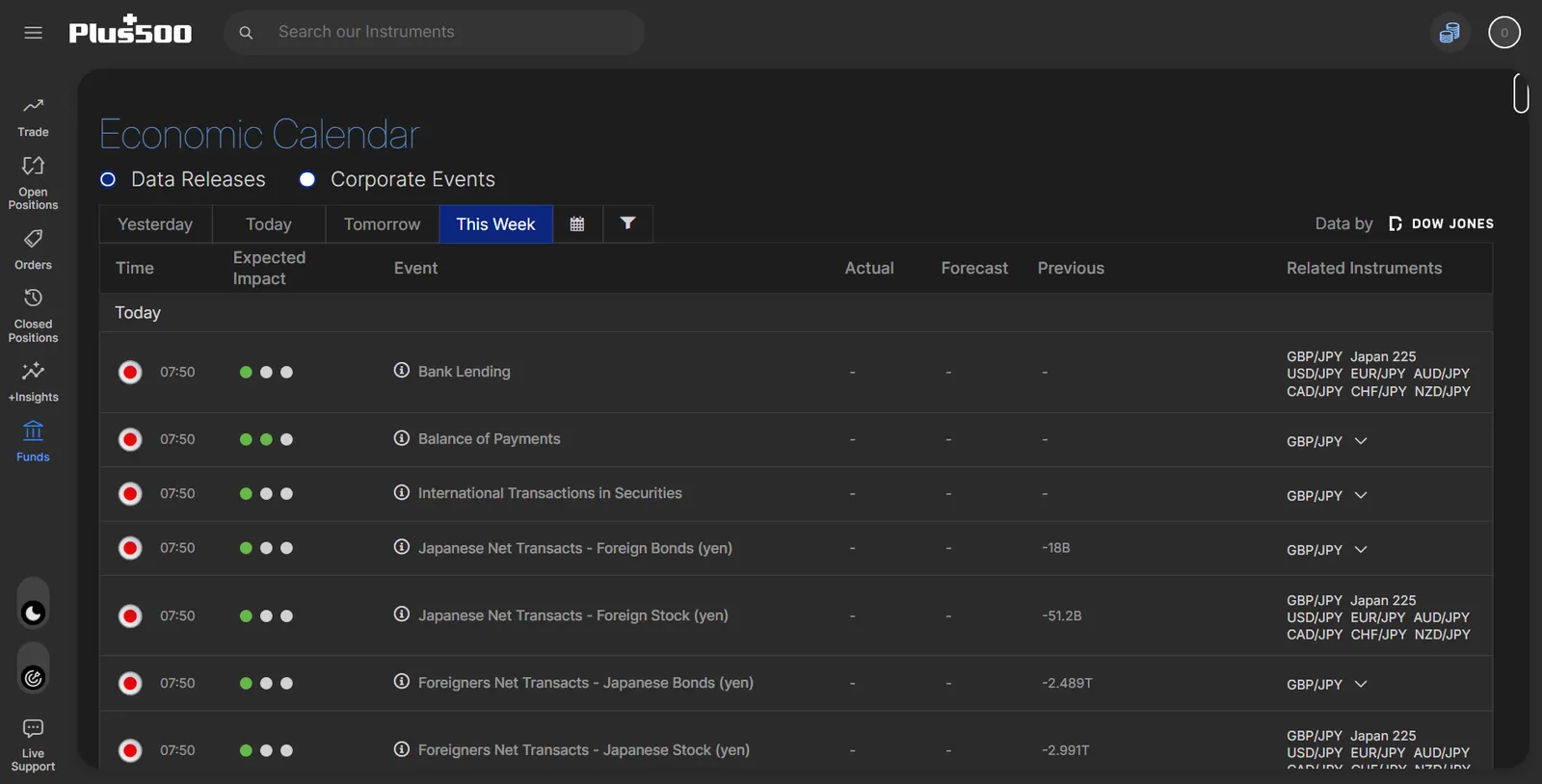
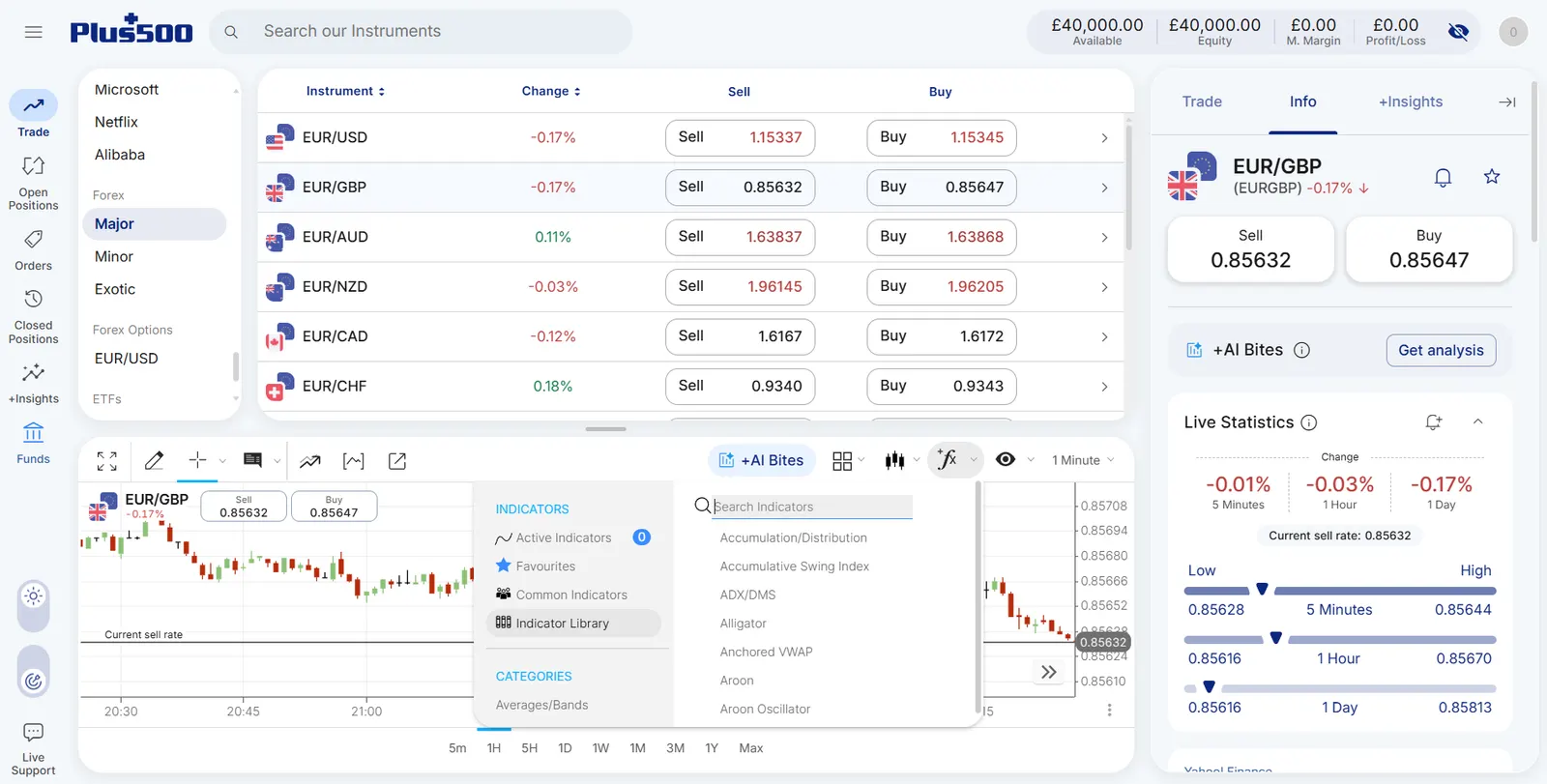
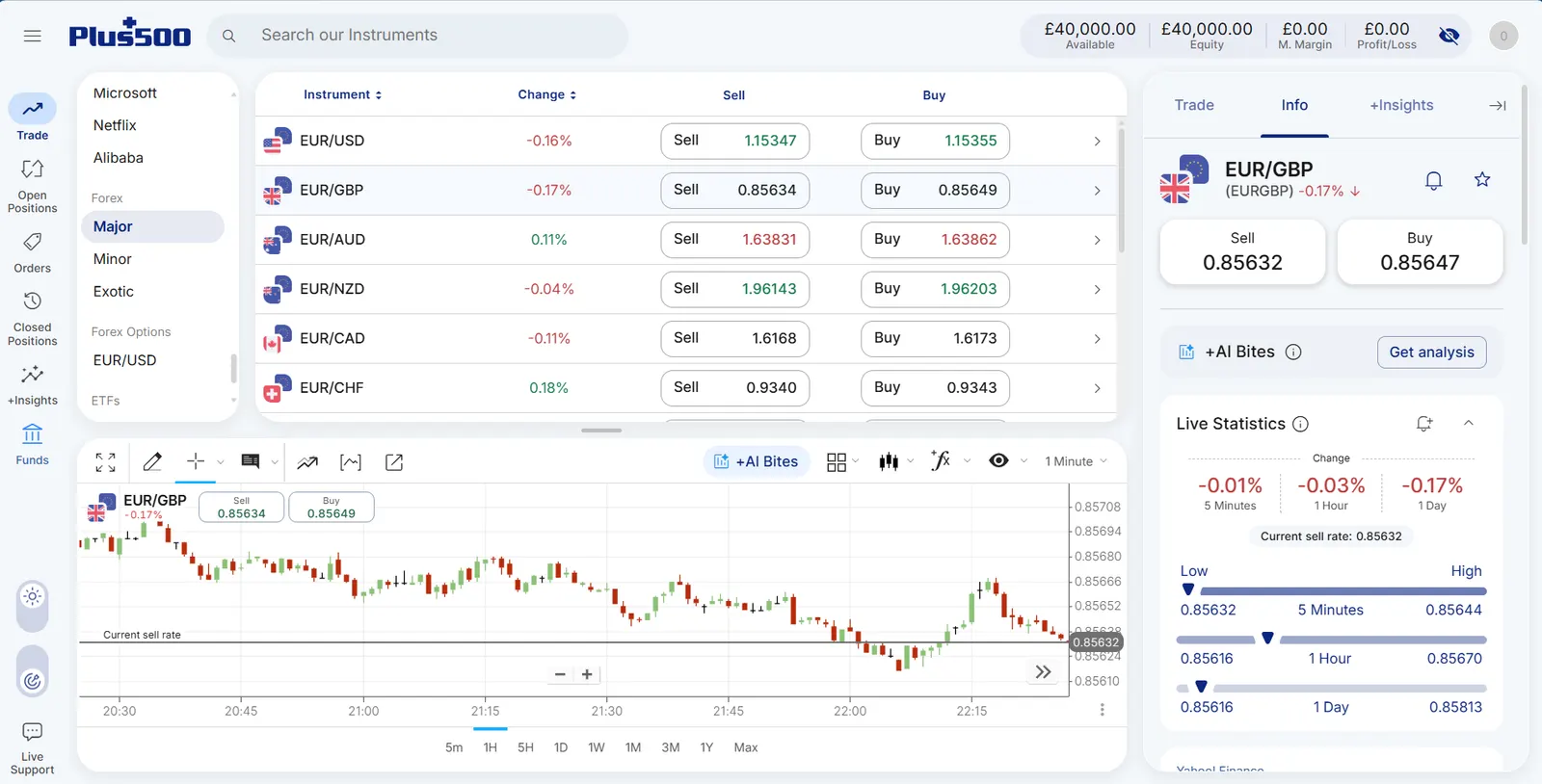
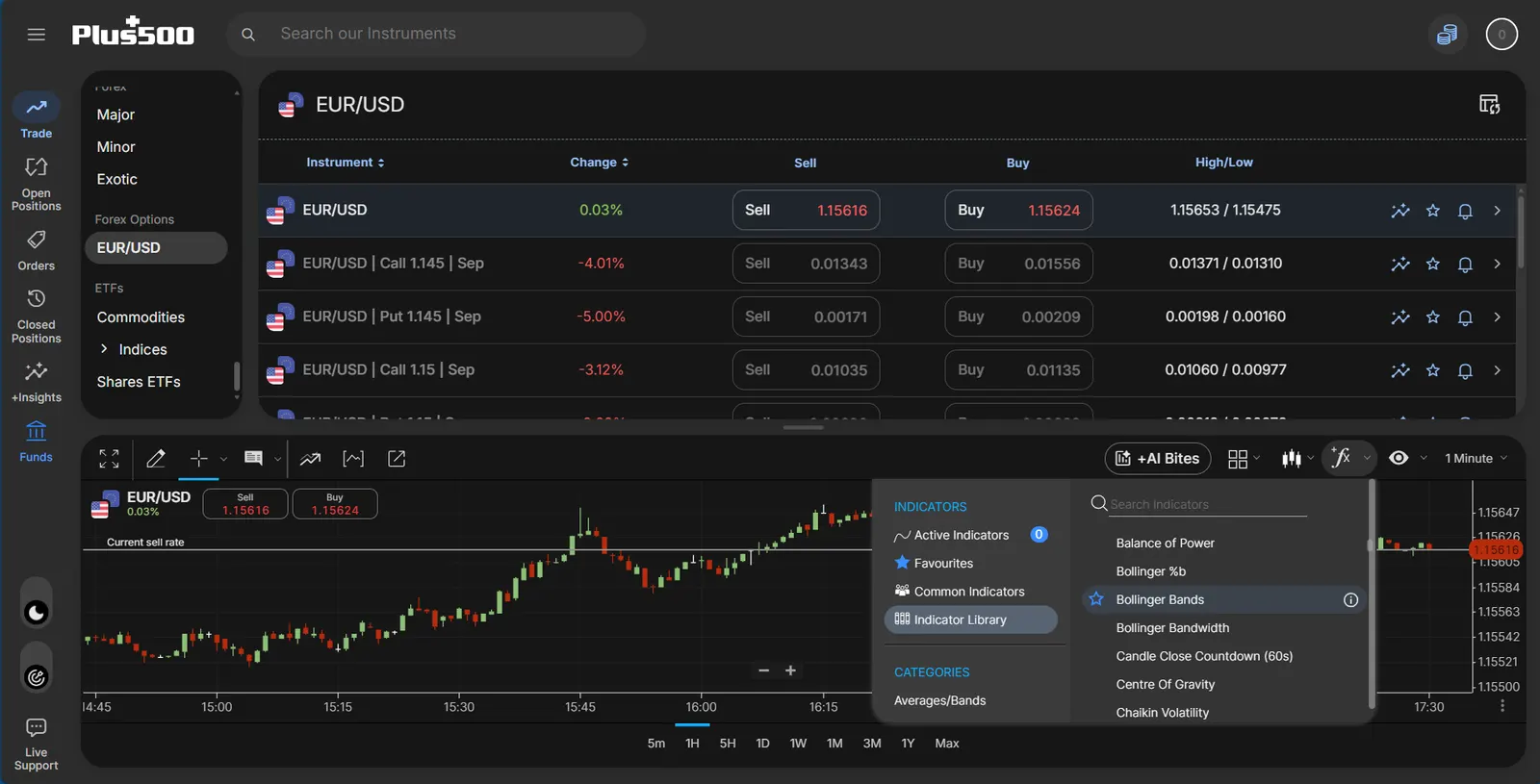
Plus500 screenshots
9. eToro: copy trading and simplicity

CFDs carry high risk. Retail leverage is FCA-capped.
- Average spread
- 1.40 pips avg (Retail)
- Trading platforms
- eToro platform
- Minimum deposit
- None published
- Regulation
- eToro (UK) Ltd (FRN 583263)
◎ Standout: CopyTrader mirrors other users' positions on the same FCA account
Why higher here? CFD Fit weighs cost, market range, platform fit and account structure, which lifts eToro above its #27 sitewide position. See the ranking method ↓
Why we recommend eToro
In my view, eToro (UK) Ltd is the clear pick for social and copy trading. The platform is the simplest here and the copy features are unmatched in this set. Costs are the trade-off: accounts are USD-denominated, so your GBP deposits pay a conversion fee, and headline spreads sit wider than the leaders.
If you are new and want to follow other investors while you learn, eToro gives you the most. If you are cost-focused and active, you will do better on a raw account.
Pros & cons
- Copy trading unmatched in this set
- Simplest platform for new traders
- Low entry amount
- USD account base means GBP deposits pay a conversion cost
- Wider FX spreads than the leaders here
- One platform only
Other brokers we reviewed
More FCA-regulated brokers hold full reviews on this site. Several match or beat the featured nine on the overall rating model, but our CFD Fit ranking weighs cost, CFD market range, platform fit and account structure together, and every broker below holds a verifiable Firm Reference Number on the FCA register. Use this table to find a broker whose strength is not CFD range or platform breadth.
| Broker | 2026 score | Known for |
|---|---|---|
| OANDA | 88 | No minimum deposit for small accounts |
| Interactive Brokers | 87 | Tiered FX commissions that fall with volume, on TWS |
| Forex.com | 83 | Deep currency-pair range on four platforms |
| Tickmill | 82 | Low-cost raw account on MT4 and MT5 |
| Vantage | 82 | Raw ECN pricing with a low per-side commission |
| ThinkMarkets | 79 | ThinkZero raw account on MT4 and MT5 |
| Axi | 78 | Raw MT4 account for algo and copy traders |
| Saxo | 78 | Premium multi-asset platform, SaxoTraderGO |
| FxPro | 77 | NDD execution across four platforms |
| Admirals | 76 | Commission-model Zero account on MetaTrader |
| FXCM | 75 | Markup pricing with TradingView integration |
| HFM | 75 | Low-minimum entry account on MT5 |
| Trading 212 | 74 | Commission-free trading app with an ISA option |
| Eightcap | 72 | Tightest advertised raw spread |
| HYCM | 71 | Long-running FCA brand on MetaTrader |
| Swissquote | 71 | Swiss-bank backing across four platforms |
| Trade Nation | 69 | Genuine fixed spreads on its own platform |

















OANDA scores highest of the group and features in our gold CFD ranking on spread-only pricing, while Interactive Brokers appears in the share CFD ranking for traders who also want the underlying stock. If you want a cost-led shortlist, I would point you to the lowest spread ranking, which covers the raw-account field.
How to choose a CFD broker
Five checks separate the nine brokers above. I recommend you run them in order. One of them usually settles it. Before you fund an account, you should size a first trade in GBP across cost, margin and pip value with our forex calculators.

Verify the FRN
FCA register; match the entity.

Match the platform
MetaTrader, cTrader or the broker's own.

Price the full cost
Spread, commission, overnight financing.

Test on a demo
Try the platform before funding it.

Confirm risk controls
Negative balance protection and stop terms.
I would start by verifying the FRN on the FCA Financial Services Register, and match it to the entity that will hold your money. MetaTrader and cTrader traders need Pepperstone, while chart-led traders should trial Next Generation or xStation on a demo; every broker here offers one (see the demo account guide). You need to price the full cost by adding commission back to the spread, as the worked example in how CFD costs work shows. Negative balance protection is mandatory, and stop-loss and guaranteed-stop terms vary by firm. On a raw account at 0.0 pips plus £2.25 per side, the broker cost calculator totals commission and spread into one all-in GBP figure per lot.
How to start trading CFDs in the UK
Opening a CFD account with an FCA-regulated broker takes four steps. I walk you through them here.
- Choose an FCA-authorised broker and confirm its Firm Reference Number on the FCA register.
- Complete the application and appropriateness assessment, which the FCA requires for CFD accounts.
- Fund the account in GBP and confirm the firm’s minimum deposit.
- Place a first trade within the FCA leverage cap for that instrument, using a stop where appropriate.
I recommend you open a demo account first. It lets you test the platform before risking capital. See the demo account guide for the brokers that offer one.
Compare brokers by the factor that decides it
Different traders rank on different things. Start from the factor that decides it for you.
Start with the overall ranking
Our main UK list scores every FCA-regulated broker on cost and execution.
The platform decides it
Pick your trading software first, then compare the brokers that carry it.
Cost decides it
The same trade costs different amounts on different account types. These lists rank on the all-in figure.
You are starting out
Simple platforms and demo accounts to learn on before any money is at risk.
How we ranked the nine CFD brokers
CFD Fit is an editorial assessment rather than a formula. It weighs four things together, cost, product range, platform fit and account structure, and no one of them is the primary weight, which is why this order does not track the Overall column and does not track raw range either. Read it as our best-CFD-platform order for a UK trader, not as a calculated score.
On range, we publish what each broker publishes and we say so where the basis is unknown. Capital.com lists 5,500+ UK markets (source capital.com/en-gb/markets), IG 15,000+ (source ig.com/uk/what-we-offer), City Index 13,500+ (source cityindex.com/en-uk) and XTB 11,500+ instruments (source xtb.com/en), each accessed 23 July 2026. None of those four states the basis on which it counts, and the four remaining brokers on this page publish no range figure at all. Spreadex is the only figure here carrying a stated basis: 4,328 instruments counting each underlying once, across 20,362 tradeable contracts, supplied to us in writing by the broker in August 2026 and excluding its 10 cryptocurrency markets, which are not available to UK retail clients. It replaces the “over 10,000 markets” we previously cited from Spreadex’s own site, which the broker has told us it cannot reconcile with either of its own counts. Because the other figures carry no stated basis, they are not strictly comparable with Spreadex’s, and we would not read small differences between them as meaningful.
Spreadex ranks third on cost and account structure rather than on range, which is the narrowest in this top group. Its tested three-pair average of 0.967 pips is spread-only with no commission on FX, its minimum deposit is £5, standard deposits and withdrawals are free, there is no inactivity fee, and the broker confirms no conversion charge or FX mark-up at trade level, at position close or on the daily financing of a non-GBP position. Its spread-bet and CFD accounts are cross-margined under one login, so total equity across the two sets available margin and the close-out point. Several brokers on this page run both products; what is specific to Spreadex is that its advertised FX floor is the same on each. Pepperstone remains our top-rated UK broker overall at 90/100 and sits second here. The spread figures on this page are the average of each broker’s tested modal spreads across EUR/USD, GBP/USD and EUR/GBP, recorded by David Levy on live UK accounts in July 2026, and Pepperstone’s commission is cross-checked against its live UK costs page. Every broker is assessed on demo and live accounts under our published process. Full detail sits in how we rate brokers.
Watch: Best CFD Forex Brokers (2026). Ranked on regulation, spreads, fees and trading platforms.
How CFD costs work
I would always add commission back to the spread when comparing costs. A CFD position costs the spread, any commission, and overnight financing. One pip on a standard EUR/USD lot of 100,000 units is worth about $10, so a raw account at 0.0 pips plus commission is often cheaper than a spread-only account at 0.8 pips once you hold size. Pepperstone’s Razor account, for example, runs raw pricing that averaged 0.17 pips across three pairs in David Levy’s July 2026 capture, plus £2.25 per side, about £4.50 round-turn on one lot. A spread-only account at 0.8 pips pays roughly $8 in spread on the same lot, near £6 at current rates, with no separate commission. Hold overnight and financing accrues daily at the benchmark rate plus the broker’s markup. The lowest commission brokers guide runs this test across the full FCA set. On a 100,000 unit EUR/USD lot each pip runs to roughly £8, and the pip value calculator returns the figure for any pair and size. If you trade size, the raw account usually wins.
Pepperstone's Razor figure is a raw spread plus £2.25 per side commission on MT4 and MT5; the other bars are spread-only advertised rates. Capital.com and Plus500 quote dynamic spreads with no fixed minimum, so neither has a bar above.
The risks of CFD trading
I would never trade without a stop-loss in place. CFDs are leveraged, so losses scale with exposure, not with your deposit. The FCA’s caps limit exposure but do not remove gap risk: prices can jump past a stop-loss, and a standard stop fills at the next available price. Negative balance protection means your retail account cannot fall below zero, but it does not protect the balance itself. FCA firms must publish the percentage of their retail accounts that lose money, and the figures across this set run from roughly 51% to 82%. How stop-loss orders behave in fast markets is covered in the education section. A 50 point move on a £5 per point position is a £250 swing, and the profit and loss calculator works out the result before you trade.
How are CFDs taxed in the UK?
CFDs let you take a leveraged position on price movement without owning the asset; see What is a CFD? for the full mechanics. CFD profits sit within Capital Gains Tax unless they are taxable as trading income, and carry no stamp duty or SDRT because no shares change hands (HMRC CG56100 and STSM118040, checked 6 August 2026).
Spread betting works on a different basis. HMRC does not normally treat placing a spread bet as trading, so profits are not taxed and losses attract no relief (BIM22015), and winnings sit outside chargeable gains under TCGA92/S51(1) (CG11700). The exception is narrow and is not about how much you trade: it applies where the bet arises from a trade you already carry on, such as a business hedging (BIM22020).
Several brokers on this page run both products. Spreadex publishes the same advertised FX floors across both books, 0.6 points on EUR/USD and 0.9 on GBP/USD and EUR/GBP (Spreadex market information, accessed 6 August 2026), and our own July sampling recorded a matching 0.8 modal on each. Spread bets and CFDs open as separate account types under one login, and the parity is an FX one: share CFDs carry 0.1% commission where share spread bets do not.
Tax treatment depends on your individual circumstances and changes over time. This is general information, not tax advice.
CFD markets by asset
CFDs cover most liquid markets, from commodity CFDs and treasury and bond CFDs to indices and shares. Each market carries its own FCA leverage cap and cost basis, so I have broken them out by asset class in the by-asset pages so you can compare like for like.
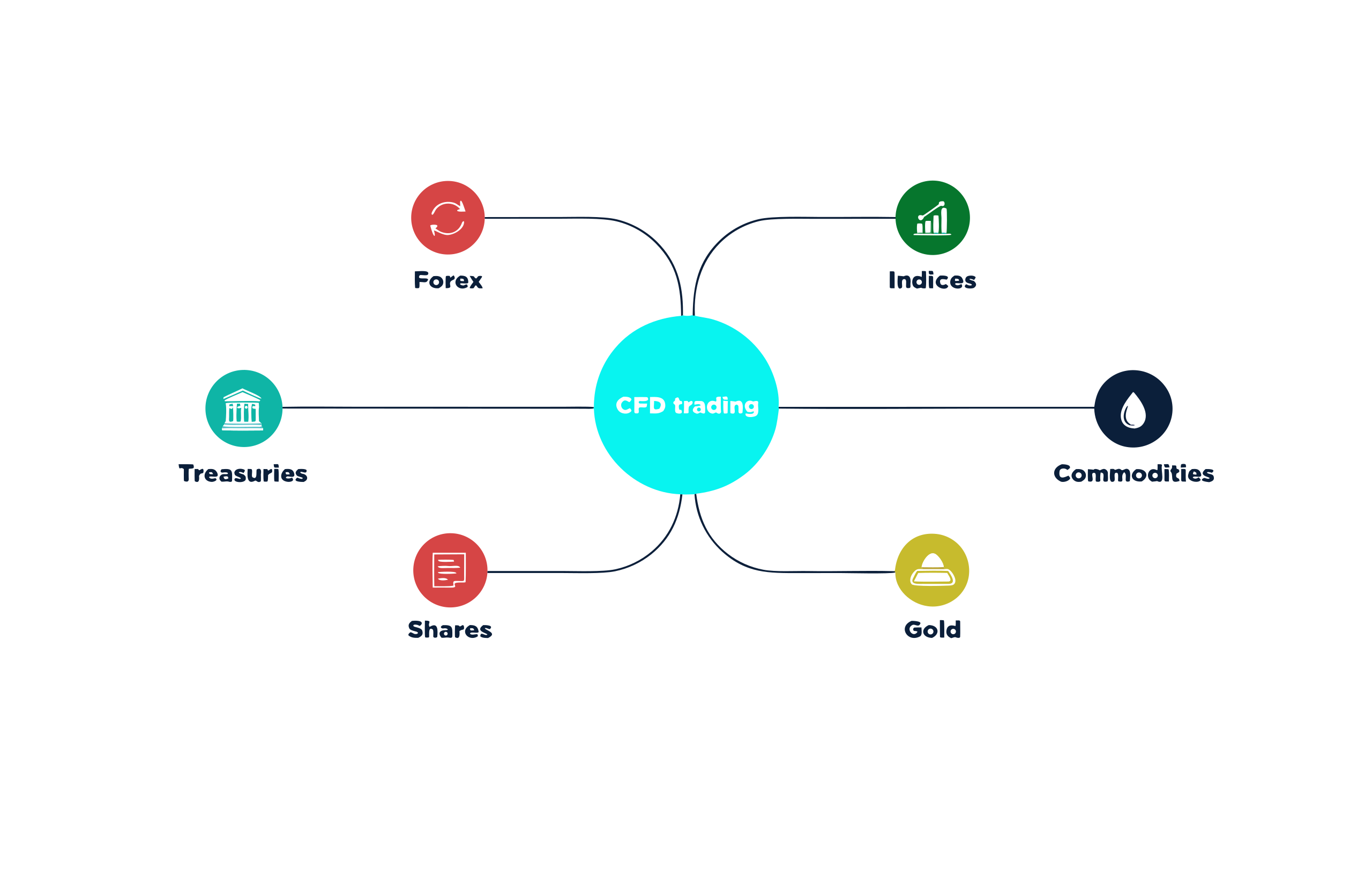
- Gold CFDsBest brokers for trading gold, capped at 20:1 for retail
- Index CFDs20:1 on major indices and 10:1 on non-major
- Share CFDsBest share CFD brokers, capped at 5:1 for retail
- Commodity CFDs10:1 on non-gold commodities
- Treasury and bond CFDs30:1 on relevant sovereign debt


FCA rules for CFD trading
I would always verify the FCA register before funding an account. The FCA applies binding rules to retail CFD accounts under PS19/18. Retail leverage is capped per instrument: 30:1 on major currency pairs, 20:1 on non-major pairs, gold and major indices, 10:1 on other commodities and non-major indices, 30:1 on relevant sovereign debt (government bonds issued by the UK, a eurozone member state, the US, Japan, Canada or Switzerland), and 5:1 on individual equities and on anything the rules do not otherwise list. A 50% margin close-out rule applies per account, negative balance protection prevents a retail account falling below zero, and a standardised risk warning with the firm’s retail loss percentage must be shown. Crypto CFDs are banned for UK retail clients under FCA PS20/10, so no broker on this page offers them to you. For you, that means a £10,000 position ties up about £333 of margin at the 30:1 major-pair cap, and the margin calculator gives the figure for any instrument and cap.
FCA leverage caps at a glance
FCA retail CFD leverage caps by asset class under PS19/18
FAQs
Which is the best CFD broker in the UK?
Are CFDs legal in the UK?
Do you pay tax on CFD profits in the UK?
What is the maximum CFD leverage in the UK?
Are CFD losses covered by the FSCS?
Which CFD broker is safest in the UK?
Can I trade crypto CFDs in the UK?
What is the difference between CFD trading and share investing?
Is CFD trading profitable?
Do Hargreaves Lansdown or AJ Bell offer CFD trading?
Related pages
About the author

Justin Grossbard is the co-founder and CEO at CompareForexBrokers. He has traded forex since 1998, leads UK broker research and has personally reviewed every FCA-regulated broker on this site. His work has appeared in Forbes, Kiplinger and Finance Magnates, and he holds a Bachelor of Commerce (Honours) and a Master of Marketing.