
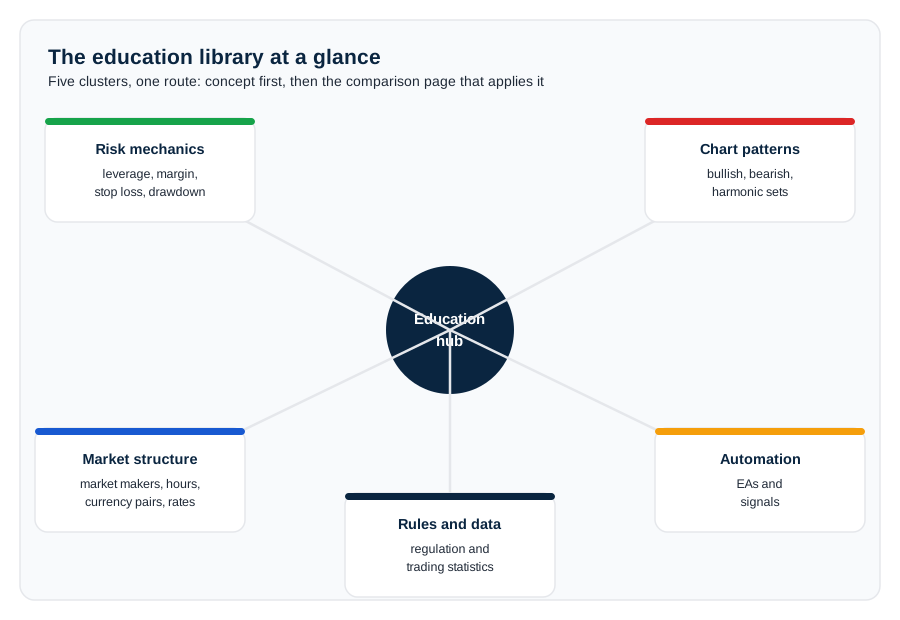
All sections on this page
Where should a UK beginner start?
In my experience, a new UK trader needs the mechanics firmly in place before chasing the markets. I would begin with what a CFD is and how it is taxed, then how leverage and margin set your risk, then how currency pairs are priced. Each guide below is a plain-English explainer with a UK worked example, written for you if you want the concept right before opening an account.
How it works in practice
Forex and CFD trading in the UK runs through FCA-regulated brokers, which cap retail leverage, segregate client money and provide FSCS cover. I always remind new traders that reading the concept first means you open an account understanding the 30:1 ceiling on major pairs, the 50% margin close-out and negative balance protection, rather than learning them after a loss. The full framework, from leverage caps to the FSCS and the Financial Ombudsman Service, is set out in FCA regulation explained.
| Asset class | Retail leverage cap (FCA PS19/18) |
|---|---|
| Major currency pairs | 30:1 |
| Certain government bonds | 30:1 |
| Non-major currency pairs | 20:1 |
| Gold | 20:1 |
| Major stock indices | 20:1 |
| Other commodities and non-major indices | 10:1 |
| Individual shares | 5:1 |
Source: FCA PS19/18, checked July 2026.
Why it matters for a UK trader
Most retail accounts lose money trading CFDs, a figure FCA-regulated firms must disclose. Understanding the concept reduces avoidable mistakes, and it tells you which broker feature actually matters for how you trade. Testing the concepts on a best demo account costs nothing and catches mistakes before they cost money. When you are ready to compare, our top FCA-regulated forex brokers pillar and the best CFD brokers UK hub rank the field.
The four pattern families are covered across the chart patterns pillar and its children, including candlestick patterns. Candlestick patterns are the shortest-timeframe signals of the four and the ones most often read without confirmation.
On what any of this pays: retail trading is not a salary, and the employed roles that are have pay bands that vary by desk and city rather than by skill alone. Our Forex trader salary UK page sets out those bands and the difference between the two.
How forex and CFD profits are taxed in the UK
For most UK retail traders, CFD and forex profits sit within Capital Gains Tax, not Income Tax. Three points cover the common cases. First, gains above the annual capital gains exempt amount, which stands at £3,000 for the 2025/26 tax year (source: HMRC, checked July 2026), are taxed at 18% or 24% depending on your Income Tax band, and CFD losses can be set against other capital gains. Second, no Stamp Duty Reserve Tax applies to a CFD, because you never take ownership of the underlying share. Third, HMRC does not normally treat placing a spread bet as trading, so profits are not taxed and losses give no relief and cannot offset gains (BIM22015). CFDs are not ISA-eligible. HMRC can treat very active dealing as a trade taxed as income, which is rare for retail accounts. Tax depends on your circumstances and can change, so confirm the current position with HMRC or a qualified adviser. This is general information, not tax advice. Our team tests broker platforms and accounts; this tax summary is separate educational content.
Five common mistakes new UK traders make
- Trading the maximum leverage. The 30:1 cap is a ceiling, not a target, and sizing to it means a 3.3% move erases the margin.
- Reading the headline spread rather than the all-in cost. Spread plus commission plus overnight financing is the real figure, as the broker economics guide sets out.
- Skipping the demo stage. Every FCA-regulated broker offers one, and mistakes there cost nothing.
- Ignoring the loss-rate disclosure. The percentage in each firm’s risk warning is that firm’s own client data, not boilerplate.
- Choosing a broker before the concept. A scalper and a position trader need different pricing, so learn the mechanic first, then open the matching comparison page.
FAQs
How do I start learning forex trading in the UK?
Is forex trading regulated in the UK?
Can you learn forex trading for free?
How are forex and CFD profits taxed in the UK?
How much money do I need to start trading in the UK?
Is spread betting the same as CFD trading?
What percentage of UK retail traders lose money?
Related pages
About the author

Justin Grossbard is the co-founder and CEO at CompareForexBrokers. He has traded forex since 1998, leads UK broker research and has personally reviewed every FCA-regulated broker on this site. His work has appeared in Forbes, Kiplinger and Finance Magnates, and he holds a Bachelor of Commerce (Honours) and a Master of Marketing.