
Risk warning: CFDs are complex instruments and come with a high risk of losing money rapidly due to leverage. The majority of retail investor accounts lose money when trading CFDs. You should consider whether you understand how CFDs work and whether you can afford to take the high risk of losing your money. This page is general information, not financial advice. Advertiser disclosure.
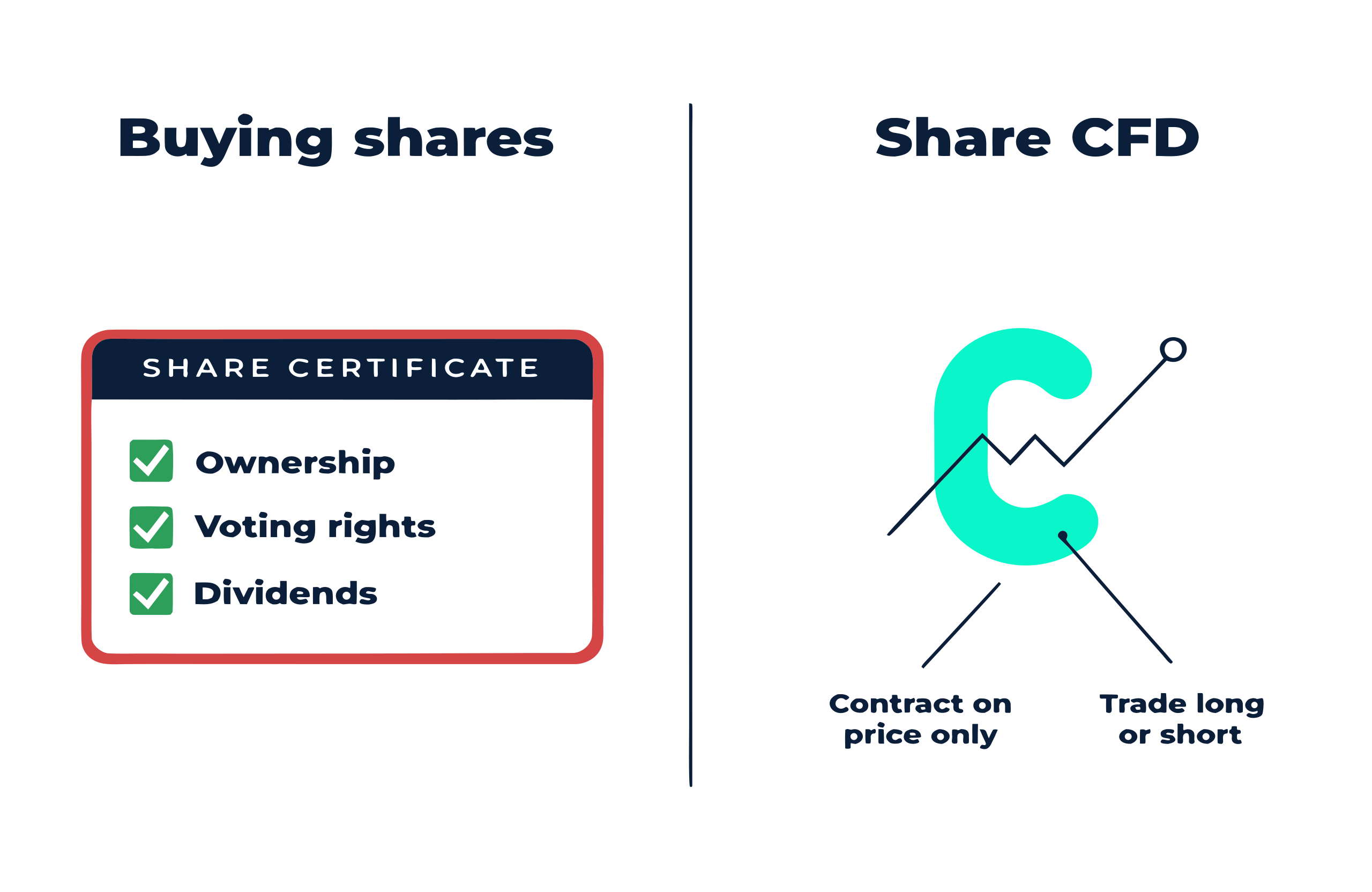
In my view, the key difference is ownership. A CFD gives you leveraged exposure to a share’s price without ownership; buying the stock makes you a shareholder with dividends and voting rights. CFDs carry no UK stamp duty but cap retail leverage at 5:1; shares incur 0.5% Stamp Duty Reserve Tax and can sit inside your ISA or SIPP.
Ownership and leverage
Buy a stock and you own it, with voting rights and dividends paid directly. Trade a share CFD and you hold leveraged exposure only, capped at 5:1 for retail clients under the FCA’s PS19/18 retail rules, with dividends arriving as a cash adjustment. I find that leverage is the real draw: it allows a larger position with the same cash, and short selling is simple, something holding the stock outright does not permit.
| Factor | Share CFD | Stock |
|---|---|---|
| Ownership | None, price exposure only | Full, with voting rights |
| Leverage cap (FCA) | 5:1 | None, cash purchase |
| Dividends | Cash adjustment | Paid directly |
| Short selling | Yes | Not without borrowing |
| Stamp duty | None | 0.5% Stamp Duty Reserve Tax on purchase |
| Capital Gains Tax | Gains taxable, losses can offset gains | Taxable outside a wrapper, sheltered inside one |
| ISA or SIPP eligibility | Not eligible | Eligible for both |
UK tax on CFDs and shares
Buying UK shares incurs 0.5% Stamp Duty Reserve Tax on the purchase, while a CFD carries none, because no share changes hands. Both CFD and share gains fall within Capital Gains Tax, and CFD losses can offset those gains, a point I think many traders overlook. Shares can be held in an ISA or SIPP, sheltering gains from tax, which CFDs cannot, so the wrapper is a genuine advantage for long-term share holders. Buying £10,000 of UK shares costs £50 in Stamp Duty Reserve Tax on entry; the equivalent £10,000 share CFD position costs none, though both are subject to Capital Gains Tax on any profit. Tax treatment depends on individual circumstances and may change, and our team tests broker platforms and accounts. (SDRT, CGT and wrapper rules per HMRC and gov.uk guidance, checked July 2026.)
Why it matters for a UK trader
In my experience, your time horizon usually decides the choice. Short-term, leveraged or hedging traders will find CFDs suit them because they skip stamp duty and allow short selling. I would suggest comparing best FCA-regulated forex brokers before funding a CFD account; leverage terms and financing costs vary. Owning shares suits long-term holding, where the ISA or SIPP shelter and the absence of overnight financing matter more than leverage. Many UK investors use both: core shares, CFD trades for shorter moves. For a fund-based alternative, the CFD vs ETF comparison weighs an ETF’s ISA shelter against leveraged exposure.
Common mistakes
Using CFDs for long-term holds piles up overnight financing that a share purchase avoids. I would not want to miss the ISA shelter on shares, which gives a real UK tax advantage. Forgetting that a CFD pays no real dividend or voting right surprises traders who expect shareholder benefits. Reading share CFD broker reviews first sets the right expectations before opening a position. Compare share CFD brokers UK side by side before funding either route. More instrument comparisons live in the education hub.
Stamp duty and CGT are the two lines that usually settle this, but position size decides how much either matters. Our margin calculator shows what a CFD position requires up front, and the fund version of the same comparison is on CFD vs ETF for UK traders.
Our reviews are reader-supported. We may receive payment when you click a link to a partner site. Learn how we make money.
FAQs
What is the difference between a CFD and a stock?
Do you pay stamp duty on CFDs in the UK?
Can you hold CFDs in an ISA?
Is a CFD riskier than buying the stock outright?
Do CFD losses reduce Capital Gains Tax?
Related pages
About the author

Justin Grossbard is the co-founder and CEO at CompareForexBrokers. He has traded forex since 1998, leads UK broker research and has personally reviewed every FCA-regulated broker on this site. His work has appeared in Forbes, Kiplinger and Finance Magnates, and he holds a Bachelor of Commerce (Honours) and a Master of Marketing.